608 Como Lake Ave, Coquitlam, Vancouver, V3J0B2
07:00 AM - 09:30 PM
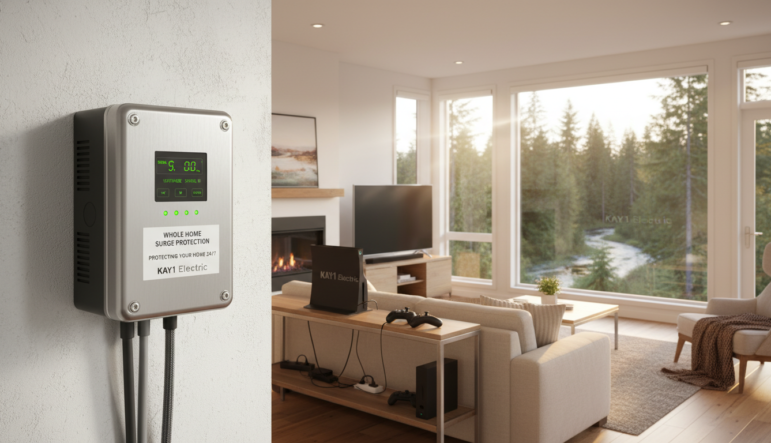
Surprising fact: an estimated one in six homes in BC reports electronic damage from power events each decade — and most incidents are not caused by lightning.
We start by defining Whole Home Surge Protection for BC residents and why this guide looks at everyday risks. A device at the electrical panel shields downstream electronics and hard-wired appliances. It often costs less over time than replacing many plug-in strips and damaged gear.
In this guide, you’ll learn what causes a surge, how damage can add up, what to buy in Canada, and what installation at the panel involves. We explain the key choice: protect a few devices at the outlet or invest in full coverage that includes major systems.
We recommend a layered approach: panel-level units plus point-of-use strips where needed. If you own a renovated Vancouver property, a Coquitlam townhouse, or a North/West Vancouver house with costly systems, we help you choose a code-conscious solution.
For practical help and safe installation, call Kay1 Electric LTD at (778) 900-1004.
Small electrical spikes happen more often than most owners realise — and they add up.
Internal sources cause most trouble. NEMA reports up to 80% of electrical surges start inside a building. Everyday switching — HVAC cycling, fridges, hair dryers, vacuums, power tools and failing appliances — creates repeated spikes that slowly wear down electronics and appliances.
These mini-events rarely trip a breaker, yet they shorten device life. You may see random resets, flicker, or intermittent faults long before a device fails completely.
Storms, grid switching during maintenance, and outage restoration can send higher voltage through local lines. Lightning strikes are rarer but severe. Local grid strain and neighbouring heavy loads also cause harmful spikes.
Repeated voltage stress causes circuit-board faults, data corruption, and costly repairs. High-energy events can overheat wiring and raise fire risk.
If you want advice for Vancouver, Coquitlam or North/West Vancouver, call Kay1 Electric LTD at 7789001004.
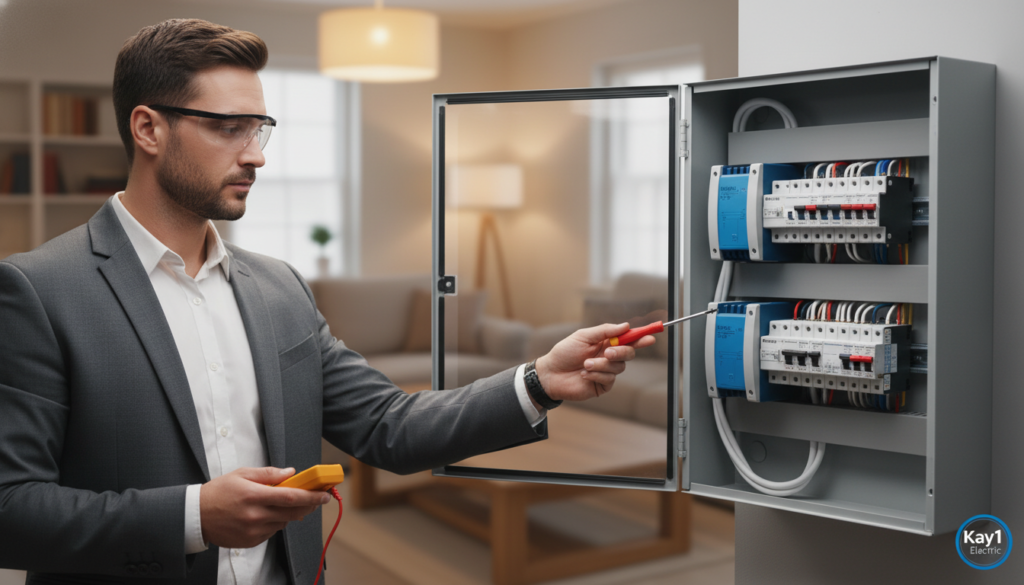
A surge protective device (SPD) installed at the electrical panel stops harmful spikes before they spread through your wiring.
We define an SPD as a unit fitted at the main electrical panel that reduces surge energy at the service entry. It shields outlets and all downstream circuits so plugged-in equipment and hard-wired systems see lower stress.
Most units mount at the main electrical panel. In larger homes or buildings, installers may add SPDs to sub-panels to cover distant circuits.
When voltage rises past a safe threshold, the device reacts instantly. It diverts excess energy to the ground path so the electrical system stays near normal voltage.
Downstream protection reduces peak energy at outlets and branch circuits. That helps protect electronics, network gear, and hard-wired systems such as HVAC, ranges, and laundry equipment.
| Location | Typical Coverage | When to add |
|---|---|---|
| Main electrical panel | All branch circuits and outlets | Standard for most homes and businesses |
| Secondary/sub-panel | Circuits fed by that panel (garage, workshop) | When distance or heavy loads justify extra coverage |
| Point-of-use strips | Individual electronics and AV equipment | Layered defence for sensitive gear |
Realistic note: panel-mounted units cut surge severity but cannot guarantee absolute immunity from extreme events. We recommend layered solutions and checking the ground path—short, clean grounding improves performance.
Ready to plan an install? Call Kay1 Electric LTD in Vancouver and surrounding areas at 7789001004 for an on-site assessment.
Not all surge solutions offer the same coverage — the difference matters for costly gear.
Plug-in strips and a basic surge protector guard only the outlets you use. They are cheap and easy to install, and they work well for TVs, computers and chargers.
Panel-mounted units reduce harmful energy at the service point so every downstream circuit sees lower stress. That gives broader home surge protection for wired loads and whole home circuits.
Power strips cannot safeguard permanently wired systems. HVAC, electric ranges, laundry circuits and other hard-wired appliances remain exposed to high-energy events and repeated surges.
“Think of a strip as a last line for gadgets; the panel device is the first line for the whole property.”
We recommend a layered plan: install a panel unit and use quality strips at sensitive locations — office, AV centre and modem. This gives both broad protection and device-level defence.
Decide this way: if you have multiple smart appliances and essential systems you cannot plug into strips, a panel unit will usually lower overall risk. For on-site advice in Vancouver and nearby areas, call Kay1 Electric LTD at 7789001004.
A clear buying decision begins by understanding the three device types and how they work with your electrical setup.
Type 1 units fit at or before the service entrance. They guard against large external events on incoming lines.
Type 2 devices mount at the panel and give broad downstream defence for your wiring and outlets. This is the common panel option for most properties.
Type 3 are point-of-use strips and protect individual gear like computers and AV equipment.
Choose SPDs that are UL 1449 listed and rated for residential panel installation in Canada.
Many devices include indicator lights or alarms. Components age with each event; typical replacement time is about three to five years depending on exposure.
Our goal is peace of mind: reduce equipment damage and lower the chance of overheating that can lead to fire.
“Match device type to installation point and check the panel before you buy.”
If you’re unsure about panel capacity or grounding, call Kay1 Electric LTD at 7789001004 for an assessment before purchase.
Start your decision by comparing realistic costs for devices and certified installation.
Here are typical price ranges you can budget for in Canada. Plug-in surge protectors usually cost about $15–$50 each. They are inexpensive but only cover individual outlets.
Whole-home options commonly run $200–$700 all-in for many residences. An alternate breakdown is device $100–$400 plus installation labour $100–$300, depending on panel access and complexity.
| Item | Typical Canadian range | Notes |
|---|---|---|
| Plug-in protectors | $15 – $50 each | Good for individual electronics, limited coverage |
| SPD device only | $100 – $400 | Type 2 panel-mounted units common for homes |
| Device + professional install | $200 – $700 | Most typical residential jobs in BC |
Compare this to replacement reality: a failed HVAC board or a stack of damaged electronics can exceed $10,000. For many owners, the cost buys reduced risk and long-term peace of mind.
Deciding point: if you have multiple high-value systems and sensitive electronics, whole-home surge coverage usually offers better value than many strips. Call Kay1 Electric LTD today at 7789001004 for a local quote and on-site advice.
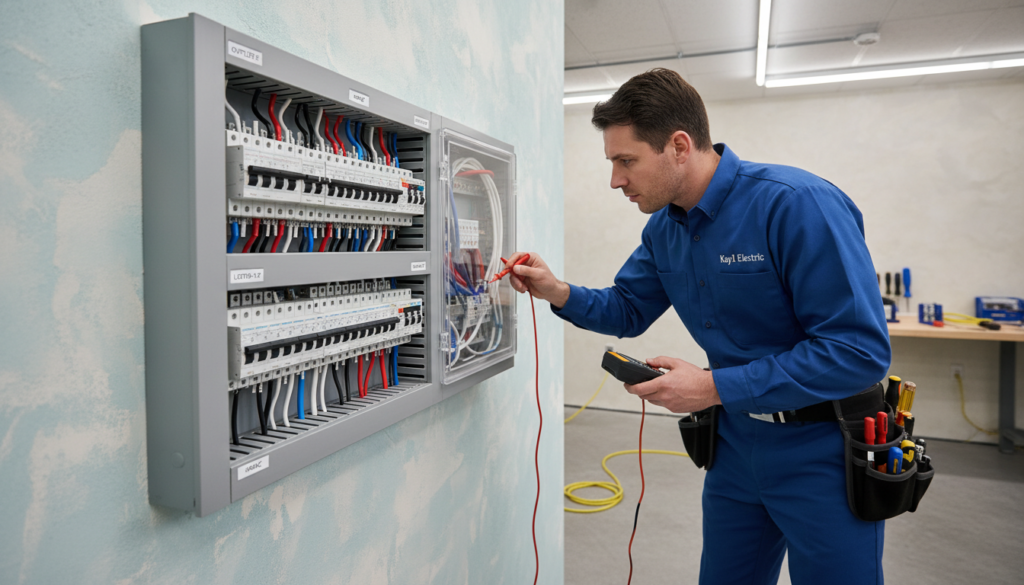
We start every job with a site inspection to check panel layout, breaker capacity and the ground path. This tells us whether an SPD can be fitted at the electrical panel, if a two-pole breaker is needed, or if a panel upgrade is best.
Working inside the panel carries real shock and fire risk. Improper wiring can leave your electrical system ineffective or unsafe.
We recommend a licensed electrician: the right wiring, testing and documentation ensure code compliance and reduce electrocution risk.
Many units need a two-pole breaker. If your panel is full, we may use approved tandem breakers, add a sub-panel, or suggest an upgrade.
Installing at a sub-panel protects only circuits on that sub-panel. To protect more of your property, we mount the SPD at the main panel.
The ground path is how excess energy is diverted. A short, solid ground connection improves how well the unit works and lowers fire and equipment damage risk.
“Proper placement and wiring reduce damage to sensitive devices and hard-wired systems.”
Kay1 Electric LTD serves Coquitlam, Vancouver, North Vancouver and West Vancouver. For an on-site check and quote, call us at (778) 900-1004 today.
In British Columbia, repeated small electrical spikes quietly shorten the life of your appliances and electronics.
Strong, reliable service, we recommend a layered approach: a panel-level whole-home surge protection device plus quality point-of-use strips for critical devices. This reduces both frequent mini surges and larger power surges so your systems see less stress over time.
One upgrade can lower the chance of costly failures and extend equipment life. You’re not just protecting stuff—you’re avoiding disruption and gaining peace of mind.
For a licensed electrician to assess your panel, grounding and the best protection plan, call Kay1 Electric LTD at (778) 900-1004. We serve Coquitlam, Vancouver, North Vancouver and West Vancouver.
