loading
608 Como Lake Ave, Coquitlam, Vancouver, V3J0B2
07:00 AM - 09:30 PM
608 Como Lake Ave, Coquitlam, Vancouver, V3J0B2
07:00 AM - 09:30 PM
Post Image
02 Feb, 2026
Posted by kay1electric
0 comment

Electrical Requirements for Hot Tubs & Pools in Coquitlam

Did you know: most hot tubs need a 240V connection and commonly a 50A service, and improper wiring can trip breakers, damage components or void the warranty.

We help Coquitlam homeowners understand why this is different from a typical outdoor plug. A hot tub combines high power draw with constant water exposure, so correct electrical work is essential for safety and reliable operation.

In this guide we’ll walk you through confirming voltage and amperage, planning a dedicated circuit, choosing the right wire and conduit, installing GFCI protection, and completing grounding and testing. Done right means code-aligned installation, a proper disconnect, tidy labelling and a system that doesn’t nuisance-trip during normal use.

When the job involves new breakers, outdoor conduit runs or final terminations, call a licensed pro. For fast, local service in Coquitlam, Vancouver, North Vancouver and West Vancouver, contact Kay1 Electric LTD at (778) 900-1004 to book an assessment or installation.

Key Takeaways

  • Most spas require 240V and ~50A; proper setup avoids damage and warranty issues.
  • Dedicated circuits and GFCI protection are non-negotiable for water-exposed equipment.
  • Correct wire, conduit and bonding improve heater and pump reliability.
  • Code-aligned installs reduce nuisance trips and long-term costs.
  • Call Kay1 Electric LTD at (778) 900-1004 for licensed installation in the Lower Mainland.

Understanding hot tub and pool electrical safety in Coquitlam

Certain outdoor installations need watertight methods and strict code oversight because water and electricity create greater hazards than backyard outlets.

Why water, power, and wiring demand extra protection outdoors

Moisture intrusion, condensation in conduit and high current loads raise the chance of a ground fault near a tub or pool. A ground fault can send current through water and cause severe shock.

GFCI protection and weatherproof fittings reduce that risk. They cut power quickly when leakage occurs and keep heaters and pumps safer.

When to call a licensed electrician instead of DIY electrical work

DIY is fine for basic tasks, but stop and call a pro for new breakers, panel upgrades, outdoor runs or spa pack connections. These actions affect house safety and warranties.

  • Common failure points: loose terminations, damaged insulation, misrouted conductors, and improper outdoor fittings.
  • When to hire: installing a 240V feed, adding a dedicated circuit, or changing panel capacity.

We recommend contacting Kay1 Electric LTD for a safe plan and local support. Call (778) 900-1004 to speak with a licensed electrician in Coquitlam, Vancouver, North Vancouver or West Vancouver.
Hot tub types and power needs: choosing the right voltage and system

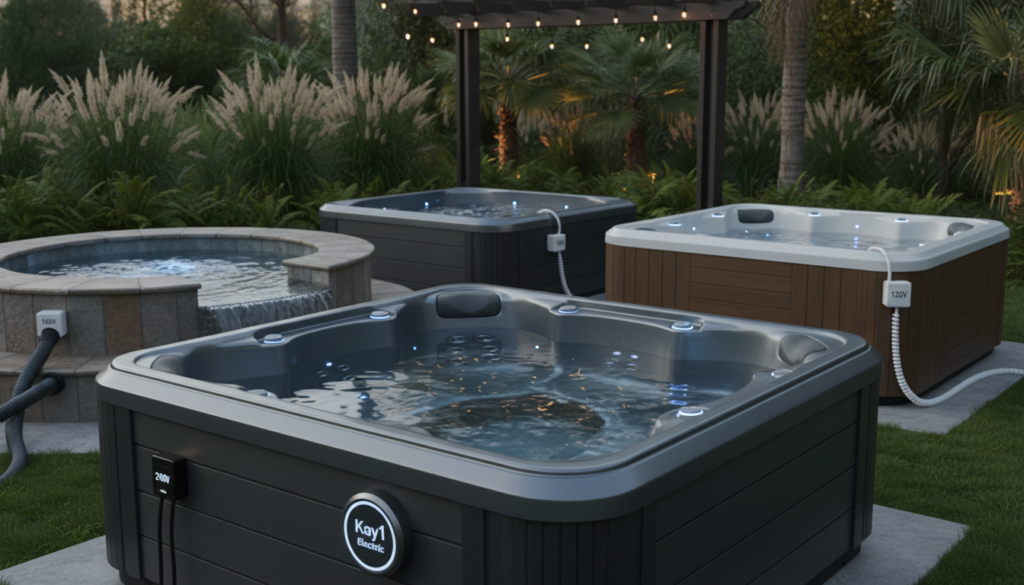
A modern hot tub setup, featuring various types of hot tubs showcasing different voltage specifications. In the foreground, a sleek, contemporary hot tub displaying a voltage gauge prominently, labeled with "Kay1 Electric." In the middle, several hot tubs in varying styles, including a built-in model and a portable unit, demonstrating clear electrical connections and power cords. The background captures a tranquil backyard setting, with soft evening lighting casting a warm glow and lush greenery surrounding the area. The atmosphere is serene, hinting at relaxation and well-being, emphasized by gentle reflections in the water. The perspective is slightly elevated, giving a comprehensive view of the hot tubs and their electrical setups, inviting the viewer to explore their options for power needs.

We start by separating plug-and-play models from traditional 240V spas so you can plan the correct electrical approach before the unit arrives.

Plug-and-play 120V: dedicated outlet and circuit

Many plug-and-play units run on 120V and must use a dedicated outlet.

This means the outlet and circuit serve only the tub. Do not share it with freezers, lighting or other outdoor loads.

Traditional 240V: typical 50A service for heater and pumps

Traditional spas often require 240V and about a 50A service to feed the heater, pumps and accessories.

That extra voltage gives faster heating and steadier temperature in colder Coquitlam weather.

Confirming voltage and amperage: owner’s manual and nameplate ratings

Always verify the unit’s voltage and amperage on the owner’s manual and the nameplate.

The nameplate lists actual ratings so your breaker, feeder and disconnect match the manufacturer’s needs.

Some 120V plug-and-play units can be converted to 240V for better performance. Mixed-voltage equipment may need a neutral, which calls for a 4‑wire feeder.

Type Common Voltage Typical Service Notes
Plug-and-play 120V Dedicated 20–30A circuit Easy install, slower heating; may be convertible
Traditional spa 240V 50A service common Faster heating, supports multiple pumps and accessories
Mixed-voltage models 120/240V Depends on nameplate May require 4-wire feeder (two hots, neutral, ground)

Need help matching your tub to the right circuit? Call Kay1 Electric LTD at 7789001004 for licensed service in Coquitlam, Vancouver, North Vancouver and West Vancouver.

Hot Tub Wiring Requirements: core code-and-safety essentials

Safe spa electrics start with a few non-negotiable steps that protect people and property.

Dedicated circuit basics

We install a dedicated feeder and correctly sized breaker so the tub gets steady power. This prevents overloads and cuts down on nuisance trips that damage heaters and pumps.

GFCI protection

GFCI devices detect a ground fault and cut power in milliseconds. For outdoor tubs, a GFCI breaker or GFCI-protected circuit is mandatory to reduce shock risk near water.

Disconnect switch location

The disconnect must be visible from the spa for quick shutdown. It also needs to be set back at least 1.5 metres so users cannot reach it while in the tub.

Permits and inspections

Permits confirm compliance with the Canadian Electrical Code and local bylaws. An inspection documents safe installation for insurance and resale.

“Call Kay1 Electric LTD at (778) 900-1004 for code-aligned permitting and inspection readiness in Coquitlam.”

Want the simplest path to compliance? Call Kay1 Electric LTD at (778) 900-1004 and we’ll guide planning through final inspection.

Planning the electrical supply from your home panel to the tub

Before any new 240V feed is installed, we verify your home service and panel layout to avoid surprises during the hook-up.

Checking panel capacity and service size

Many Canadian homes have 100A or larger service, but that alone doesn’t guarantee available capacity. We perform a load calculation and inspect breaker spaces for a double-pole breaker.

Breaker sizing and matching amperage

Breaker selection must match the manufacturer’s listed amperage. A correctly sized breaker protects the unit and the home electrical system from overload.

Wire gauge selection and run length

#6 copper is the common choice for a 50A circuit. Longer runs can cause voltage drop, so we may upsize the conductor to preserve voltage and power delivery.

Four-wire setups explained

Many modern units require a 4-wire feed: two hots, a neutral, and a ground. This supports mixed-voltage components inside the cabinet and prevents nuisance trips.

Service Element Typical Value Why it matters
Service size 100A–200A Determines spare capacity for new 240V load
Breaker Double-pole 50A Protects circuit based on unit amperage
Wire gauge #6 CU (typical) Balances current capacity and voltage drop
Feed type 4-wire (2 hots, neutral, ground) Supports mixed-voltage tub electrical components

Planning correctly reduces overheating, prevents repeated trips, and keeps heaters and pumps running reliably. Call Kay1 Electric LTD at 7789001004 for an on-site panel assessment in Coquitlam and across the Lower Mainland.

Routing and protecting wiring outdoors with conduit

Protecting exterior conductors with the right conduit and fittings prevents moisture damage and reduces nuisance faults.

We choose conduit based on durability, corrosion resistance and serviceability for Coquitlam climates. PVC is common for buried runs because it resists corrosion and is easy to join.

Conduit options and flexible connections

Metal conduit gives extra mechanical protection where required. At the equipment bay we use liquid-tight flex to absorb vibration and fit tight spaces.

Underground routing and trench guidance

Typical trench depth is about 18 inches, but verify local code before digging. Keep runs direct and mark the route to avoid future damage from landscaping or digging.

Moisture-rated materials and watertight connections

Use wet-location conductors and watertight fittings to keep water out of the conduit system. Proper connectors and seals prevent corrosion and failed connections.

Run Type Recommended Conduit Key Benefit
Buried feeder PVC conduit Corrosion resistance, low cost
Exposed or mechanical risk Metal conduit (EMT/RMC) Physical protection
Equipment bay entry Liquid-tight flexible conduit Vibration and alignment flexibility

Want a tidy, code-ready installation? Call Kay1 Electric LTD at 7789001004 for conduit selection and safe wiring service in Coquitlam, Vancouver, North Vancouver and West Vancouver.
How a typical hot tub electrical installation is completed

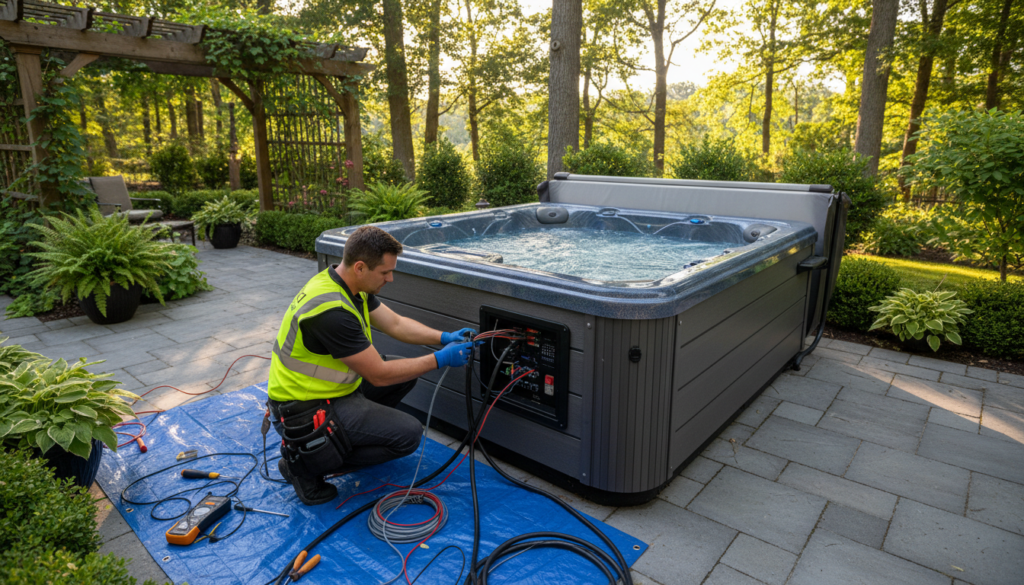
A professional electrician from Kay1 Electric is diligently installing wiring for a hot tub in a residential backyard setting. In the foreground, the electrician, dressed in a safety vest and work gloves, is carefully connecting wires to the hot tub’s control panel. Tools and electrical components are scattered nearby, emphasizing the installation process. In the middle ground, the hot tub is partially filled with water, showcasing its sleek design and built-in features. The background features a well-maintained patio area with greenery and decorative plants, creating a relaxing atmosphere. The lighting is bright, indicating a sunny day, with shadows cast by the surrounding trees. The angle of the shot is slightly elevated, providing a comprehensive view of the installation setup, conveying professionalism and expertise in electrical work.

We map the full path so you see how power moves from the main panel to the outdoor GFCI disconnect and into the spa control pack.

Panel to breaker: a double-pole breaker sized to the nameplate rating feeds the protective device. The GFCI disconnect then provides local shutoff and earth-fault protection before the equipment.

Neutral wiring done right

For a 4‑wire setup we separate the neutral and ground carefully. A miswired neutral is the most common cause of immediate GFCI trips and nuisance faults.

We torque terminations to spec and route conductors to avoid shared neutrals that confuse protective devices.

Final connections and labelling

We test the GFCI, verify voltage and document the connections.

Clear labelling at the disconnect and the panel makes future service simple. “Ready for use” means tested protection devices, secure terminations, and a safe electrical system.

“Call Kay1 Electric LTD at 7789001004 for expert hot tub installation and on-site verification in Coquitlam and the Lower Mainland.”

Step Key device Why it matters
Source Panel & breaker Matches unit amperage and protects feeder
Protection GFCI disconnect Local shutoff and earth-fault trip
Termination Spa control pack Correct neutral/ground separation and torque

Grounding, bonding, and commissioning for safe operation

A clear grounding and bonding plan stops stray current and keeps metal parts at the same potential around your tub and spa. Proper ground paths give a reliable route for fault current and protect people and controls.

Grounding vs bonding: reducing shock risk

Grounding provides a low-resistance path back to the service so a fault trips breakers quickly.

Bonding ties conductive parts together so they share the same voltage and reduce touch potential near water.

Commissioning checklist and testing

  • Verify correct voltage and steady power at the spa connection.
  • Test the GFCI with the TEST button; confirm it trips and resets reliably.
  • Operate the disconnect to ensure it fully isolates the circuit before service.
  • Measure continuity on bonding conductors and confirm a solid ground connection.

Common safety setbacks to avoid

Avoid routing wiring under the tub, running beneath overhead power lines, or using undersized conductors or aluminium in damp areas. These choices lead to nuisance trips, damaged controls and unsafe conditions.

“Do not use the tub until installation and testing are complete and an inspector signs off.”

For certified commissioning and safe service in Coquitlam and the Lower Mainland, call Kay1 Electric LTD at 7789001004.

Conclusion

,

The right combination of circuit sizing, protection and grounding makes the system reliable for years.

Hot Tub Wiring Requirements centre on correct voltage and amperage, a dedicated 240V/50A circuit with GFCI protection, a visible disconnect placed per code, and solid panel-to-spa connections.

We recommend #6 copper conductors and a 4-wire feed where the spa design needs a neutral. Permits, inspection-ready work and careful neutral terminations prevent nuisance trips and safety risks.

For experienced, compliant installations in Coquitlam, Vancouver, North Vancouver and West Vancouver, call Kay1 Electric LTD. Book an assessment or hire a licensed electrician at (778) 900-1004.

FAQ

What electrical requirements apply to hot tubs and pools in Coquitlam?

Local installations must follow the Canadian Electrical Code plus Coquitlam bylaws. That typically means a dedicated circuit sized to the unit, GFCI protection at the feeder or breaker, proper grounding and bonding, an accessible disconnect, and a permit with inspection. We advise contacting a licensed electrician to confirm specifics for your property.

Why do water and outdoor power need extra protection?

Water dramatically increases shock risk and promotes corrosion of connections. Outdoor installs face moisture, UV and temperature swings. GFCI protection, wet-location wiring methods, and corrosion-resistant fittings reduce hazard and help comply with code.

When should I call a licensed electrician instead of doing it myself?

Call a licensed electrician if the job involves panel changes, 240V circuits, buried conduit, GFCI breakers, grounding or permit work. These tasks carry safety and legal obligations; professionals ensure correct breaker sizing, wire gauge, bonding and code-compliant inspections.

How do I know whether my spa uses 120V or 240V?

Check the owner’s manual and the equipment nameplate — they list voltage and amp draw. Plug-and-play models use 120V and a dedicated outlet, while most conventional models need 240V service, often on a 50A circuit for heaters and pumps.

What does “dedicated circuit” mean for a spa?

A dedicated circuit is reserved only for the spa equipment and its control pack. No other loads should share that breaker or feeder. This prevents overloads and nuisance trips and complies with code for large motor and heating loads.

Is GFCI protection always required?

Yes. GFCI (ground-fault circuit interrupter) protection is required where water and electricity are near one another. It can be provided by a GFCI breaker at the panel or a listed spa GFCI disconnect at the equipment. This device trips quickly on leakage current to reduce shock risk.

Where must the disconnect switch be located?

The disconnect must be within sight of the spa yet typically set back at least 1.5 metres (check local rules). It allows quick shutoff for service and emergency and must be lockable when required by code.

Do I need a permit and inspection for installation in Coquitlam?

Yes. Most municipalities require an electrical permit and a post-installation inspection. Permits ensure the installation meets the Canadian Electrical Code and local standards. Your electrician usually pulls the permit and schedules the inspection.

How do I check my home panel capacity before adding a 240V spa?

Have an electrician evaluate your main service size, existing loads, and spare capacity. They’ll calculate whether the panel can accommodate the spa’s continuous loads or if a service upgrade is necessary.

How is the correct breaker size and wire gauge chosen?

Breaker sizing matches the spa’s maximum continuous load per the nameplate and code rules. Many 240V spas need a 50A breaker with #6 copper conductors, but lighter or heavier units change the size. An electrician verifies the proper ampacity and conductor type.

Why do some installations use a four-wire feeder?

A four-wire feeder provides two hots for 240V, a neutral for any 120V components (lights, control circuits) and a separate grounding conductor. This keeps the ground and neutral isolated at the spa, preventing stray currents and nuisance trips.

What conduit and protection should be used for outdoor runs?

Use suitable conduit (PVC or metal) for exposed runs and liquid-tight flex at the equipment bay. If burying cable, follow local depth requirements and use conduit or direct-bur rated cable. Use wet-location connectors and sealed fittings to prevent moisture intrusion.

How deep should underground wiring be trenched?

Depth varies by method and municipality. Direct-bur cable and conduit depths differ; for example, conduit may require deeper burial than direct-bur rated cable. Confirm trench depths with your electrician and local code before digging to avoid future damage.

What happens from the panel to the spa during installation?

A typical path runs from the main panel to a GFCI breaker or GFCI disconnect, then through conduit to the spa control pack. The control pack distributes power to pumps, heater and ancillary components. Proper labelling, neutral handling and bonded grounding complete the system.

How do electricians prevent nuisance trips from a miswired neutral?

Technicians keep the neutral isolated from the grounding conductor at the spa and ensure the neutral is only tied at the main service. They use correct terminal connections and test the system under load to confirm stability before final inspection.

What grounding and bonding measures are required?

Both grounding (equipment grounding conductor) and bonding (equipotential bonding of nearby metal components and rebar) are required to reduce touch voltage. Bonding conductors tie metal fittings, tubs and nearby pool equipment to the same potential to lower shock risk.

What testing should be done before first use?

Test the GFCI and disconnect operation, verify correct voltage at the control pack, confirm continuity of grounding and bonding, and ensure breakers and labelling match the installation. Your electrician will run these tests and document results for inspection.

What common safety mistakes should be avoided?

Avoid undersized wire or breaker, sharing the circuit with other loads, skipping GFCI protection, burying wiring too shallowly, and failing to bond nearby metal objects. Also avoid locating equipment under overhead lines or directly under the spa.

Who do we contact for compliant installation and service in Vancouver area?

Call Kay1 Electric LTD at 778-900-1004. We serve Coquitlam, Vancouver, North Vancouver and West Vancouver with licensed electricians who pull permits, install GFCI protection, size feeders correctly and ensure safe, code-compliant systems.
Leave a Comment

Your email address will not be published.*

Recent Comments

No comments to show.

Categories

Archive

April 2026
M T W T F S S
 12345
6789101112
13141516171819
20212223242526
27282930