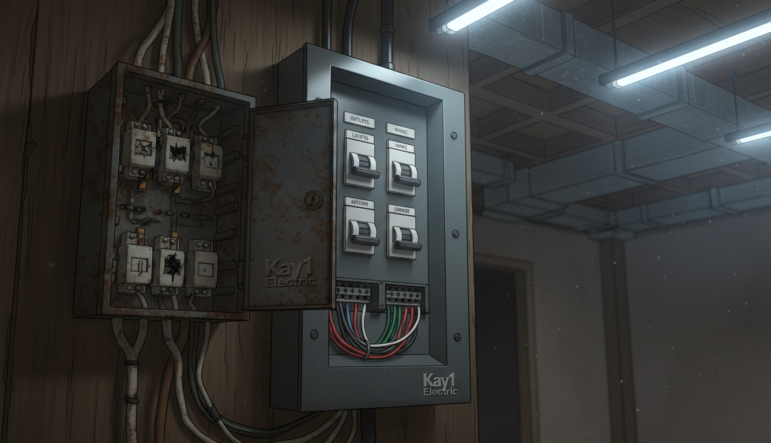
Replacing a Fuse Box with Circuit Breakers: Is It Worth It ?
Surprising fact: nearly 40% of older Metro Vancouver homes still rely on legacy fuse protection, even though modern households use far more power than they did three decades ago.
We ask a simple question for homeowners across Coquitlam, Vancouver, North Vancouver and West Vancouver: is converting a Fuse Box to Breaker Panel worth the cost for safety, convenience and future needs?
At a high level, the change moves you from single‑use protection to resettable circuits. That shift improves troubleshooting, speeds recovery after trips, and often meets insurer expectations. This guide outlines how protection works, when upgrades make sense, what licensed electricians inspect, permitting in Canada, typical steps and cost drivers.
Safety first: panel work carries real shock and fire risk and must be completed by a licensed electrician. For local advice or a consultation, call Kay1 Electric LTD at (778) 900-1004. We serve homes and businesses in Coquitlam, Vancouver, North Vancouver and West Vancouver.
Key Takeaways
- Modern panels offer safer, resettable protection and often satisfy insurer rules.
- Many older homes feel “maxed out” under today’s electrical demands.
- Licensed electricians handle inspections, permits and safe installation.
- We cover Coquitlam, Vancouver, North Vancouver and West Vancouver — call (778) 900-1004.
- This guide explains when an upgrade makes sense and what drives timelines and costs.
Understanding what a fuse box does in older Canadian homes
If your home predates widespread modern wiring, its primary electrical safeguard may be a single‑use device that melts under excess current. We explain what that means and why it matters for safety.
How fuses protect circuits and why they’re single-use
A fuse contains a thin metal element that melts when current exceeds its rating. When it melts, the circuit opens and power stops. That melting is the fuse doing its job.
The element must be replaced after it melts. A blown fuse signals excess current or a fault on the circuit.
Common limitations of older installations
Many pre-1970s homes have limited circuit counts and service capacity, often around 60A. That setup struggles with modern appliances and can mean frequent replacements and inconvenience.
Why oversizing fuses creates a fire risk
Homeowners sometimes fit a higher-rated part to stop nuisance trips. This defeats the protective design and lets wiring run hot, increasing conductor failure and fire risk.
| Characteristic |
Older setup |
Warning sign |
| Service capacity |
Often 60A |
Frequent blown fuses |
| Protection type |
Single‑use metal element |
Warm or charred holders |
| Repair |
Replace element each time |
Flickering lights at motor start |
If you see repeated failures or signs of overheating, stop and call a licensed electrician. Reach Kay1 Electric LTD at (778) 900-1004 for an inspection.
How a modern circuit breaker panel works
Modern protective panels act like reusable circuit guards that stop overloads and let you restore service quickly.
Resetting tripped circuits vs replacing fuses
A circuit breaker is a reusable switch. It trips when an overload or short occurs. After you fix the cause, you simply reset the device and service returns.
This saves time compared with replacing single‑use elements. It also makes troubleshooting easier because you can identify which circuit tripped.
Supporting both 120V and 240V circuits for today’s appliances
Homes need both 120V and 240V circuits for common appliances like ranges, clothes dryers, heat pumps and EV chargers. A modern breaker setup safely delivers these voltages while isolating faults.
Expansion matters: circuit breaker panels are designed to add circuits when you renovate or add high‑demand equipment. But repeated trips are a symptom, not a fix—call for diagnosis.
| Feature |
Benefit |
What you should do |
| Resettable protection |
Quick recovery after trips |
Reset and monitor |
| 120V & 240V support |
Runs modern appliances |
Plan circuits for high loads |
| Room for expansion |
Add circuits for renovations |
Ask an electrician about capacity |
If you’re unsure whether your current setup can support new appliances or an EV charger circuit, call Kay1 Electric LTD at (778) 900-1004 for an assessment.
Fuse Box to Breaker Panel: when an upgrade is worth it
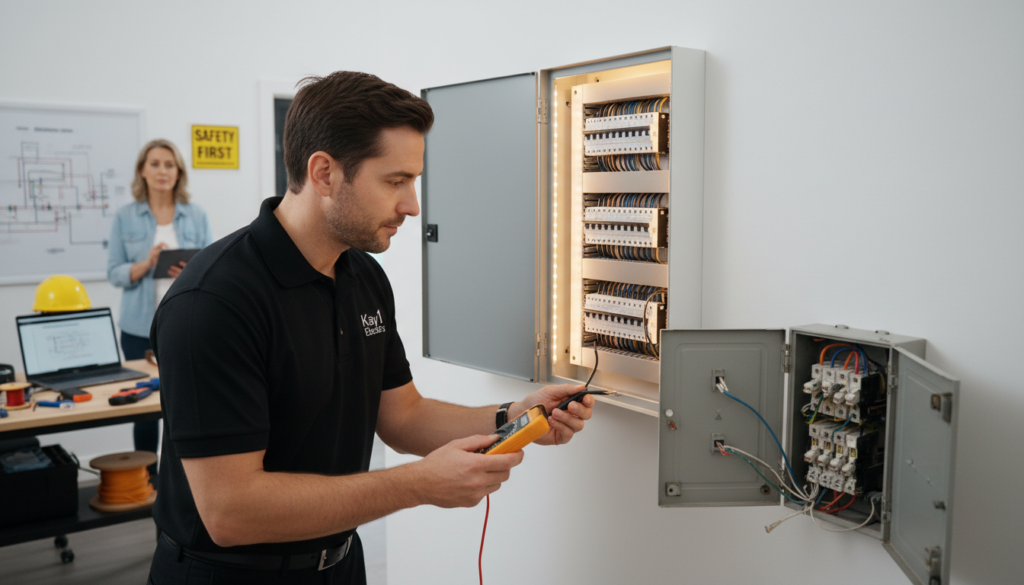
Older Metro Vancouver homes often show clear signals that their electrical service can’t meet modern needs. We outline when an upgrade becomes practical and which changes give the best return on safety and convenience.
Signs your electrical system is falling behind modern loads
Frequent trips or blown devices during normal use are a top sign. So are warm outlets, flickering lights, or not enough circuit spaces for new equipment.
Renovations and new appliances that require more circuits
- Kitchen remodels: dishwasher, microwave, fridge and countertop receptacles often need dedicated circuits.
- Adding heat pumps or EV charging: these create sustained higher loads and usually need upgraded service.
- Home offices or workshop tools: multiple high-draw devices running at once reveal capacity limits.
How capacity (60A, 100A, 200A) affects daily power
In plain terms: a 60‑amp service restricts how many appliances you can run together. A 100‑amp gives more flexibility for a typical renovated home. A 200‑amp service supports heavier loads, future expansion and large equipment.
Insurance and resale considerations
Insurance companies often prefer modern protective equipment and may flag outdated services during inspections. Upgrading can ease resale negotiations and protect value.
Deciding is easier with a site assessment. Call Kay1 Electric LTD at (778) 900-1004 for a tailored recommendation in Coquitlam, Vancouver, North Vancouver and West Vancouver.
Safety and compliance benefits you gain right away
Upgrading your home protection brings immediate, measurable gains in everyday safety and compliance.
Overload and short-circuit protection: modern circuit breakers trip quickly when a fault appears. That rapid response limits overheating and lowers the chance of conductor failure, reducing the risk of fire.
Panels can include advanced devices that detect dangerous arc faults. An AFCI (arc-fault circuit interrupter) watches for electrical arcs. Arcing can start hidden hot spots that lead to fires. AFCI protection is common in bedrooms and living areas where cords and wiring flex over time.
An GFCI (ground-fault circuit interrupter) protects people. It senses small leaks of current and cuts power in places with moisture risk. Install GFCI protection in bathrooms, kitchens, garages and outdoor receptacles for better shock prevention.
Meeting current standards is more than paperwork. A proper inspection validates the work and gives you confidence that circuits are arranged and labelled correctly.
If you notice nuisance trips, warm outlets, or moisture-prone areas that need GFCI, call Kay1 Electric LTD at (778) 900-1004. We’ll recommend which protection suits your home and help you protect what matters today.
Pre-upgrade assessment: what a licensed electrician will inspect
Before any wiring is changed, we perform a methodical site assessment to map risks and needs.
Evaluating the existing electrical panel, circuits, and loads
We diagram the electrical panel and note breaker sizes and available spaces. Our team checks for heat damage, loose connections and whether the service meets actual household loads.
Checking wiring condition in older homes
We inspect branch wiring for aluminum conductors and identify knob-and-tube runs. Those conditions affect scope and may require partial rewiring so each connection is rated correctly.
Finding double-tapping and overcrowded circuits
We look for double-tapping/double-lugging — more than one conductor under a terminal. That raises overheating risk. We also spot overcrowded circuits when many devices share a single line, which causes nuisance trips and warm outlets.
- What we measure: wire gauge, breaker size and load balance.
- What we map: circuit locations and dedicated lines for major appliances.
- Outcome: a recommended panel size, circuit map and priority fixes.
Ready for a site assessment in Coquitlam, Vancouver, North Vancouver or West Vancouver? Call Kay1 Electric LTD at (778) 900-1004 to schedule an inspection and get a clear plan for upgrading circuit breaker protection.
Permits, inspections, and what to expect in Canada

Permits and utility coordination shape the schedule and safety of any electrical upgrade across Canadian municipalities. We walk you through why this work usually needs formal approval and a utility disconnect before live conductors are handled.
Why a replacement needs permits
This installation changes core safety parts of your electrical system. Municipal authorities and provincial bodies require a permit so a qualified third party can confirm the work meets modern standards.
What permits and inspections verify
Inspections confirm correct connections, grounding and bonding, and that circuit protection meets code. They also ensure safe routing and secure terminations for services and conductors.
Coordinating with your local electrical utility
We coordinate a planned disconnect and reconnection with the utility. This avoids unsafe temporary wiring and ensures the service change happens during an approved outage window.
- Scheduling and time: utility availability and inspection booking can extend project time even when on-site work is quick.
- Paperwork: a licensed electrician handles permit applications and arranges the inspection to reduce delays.
- Safety: utility coordination prevents accidental live work on service conductors.
Next step: Call Kay1 Electric LTD at (778) 900-1004. We’ll advise on local requirements in Coquitlam, Vancouver, North Vancouver and West Vancouver and handle permits, utility liaison and the full replacement process for you.
Step-by-step: replacing a fuse box with a circuit breaker panel
A clear, methodical process makes converting old protection into modern, resettable circuits straightforward and safe.
Documenting and diagramming before disconnection
We begin by diagramming every fuse box circuit, noting what each circuit serves and flagging any label mismatches. Accurate documentation prevents errors once the service is shut down.
Removing the old unit and preparing the location
Next we remove the old equipment and assess mounting, clearances and any relocation needs. We confirm the wall and wiring space meet code before installation.
Installing the new unit and reconnecting circuits
We install the new breaker panel, select correct breaker types and land conductors to match wire size. Reconnection is staged so circuits are re-energized in a controlled order to avoid misfeeds and nuisance trips.
Testing, labelling and timeline
Commissioning includes load checks, polarity verification and thermal inspection for abnormal heating. We label every breaker clearly for fast troubleshooting and future work.
- Typical installation time: about 6–8 hours.
- Time increases if wiring is damaged, extra circuits are needed, or inspections delay work.
This is licensed electrical work. Call Kay1 Electric LTD at (778) 900-1004 to schedule a professional replacement and protect your home in Coquitlam, Vancouver, North Vancouver and West Vancouver.
Cost in Canada: what influences the price of a panel upgrade
Understanding the true cost of an electrical upgrade helps homeowners budget with confidence.
Typical price range and what it may include
“A realistic range for many conversions sits near $1,200–$2,500.” That quote usually covers assessment, new panel and breakers, labour, reconnections, labelling and testing.
Factors that change cost
Major drivers include panel size and the number of circuits required. Larger panels and added spaces raise material and labour costs.
Wiring condition also matters. Aluminum conductors, knob-and-tube, or damaged conductors increase scope and expenses.
| Driver |
Effect on price |
What we check |
| Panel size / spaces |
Moderate to high |
Needed breaker count |
| Rewiring or repairs |
High |
Wire type and condition |
| Added circuits |
Variable |
Dedicated kitchen, garage, EV ready |
When additional upgrades make sense
During installation we often recommend adding dedicated circuits for kitchens or workshops. Doing that now saves labour later and avoids repeat disruption.
We provide transparent quotes and tailor services to your home. Call Kay1 Electric LTD at (778) 900-1004 for a site-specific estimate in Coquitlam, Vancouver, North Vancouver or West Vancouver.
Conclusion
Swapping old protection for modern resettable circuits usually pays off in reliability and peace of mind.
For many homes, the upgrade reduces fire risk, simplifies troubleshooting and meets insurer preferences. A typical replacement often finishes within a day (about 6–8 hours), though scope and permits can extend that window.
Keeping an outdated setup leaves you with limited circuits, the urge to fit oversized parts, and harder fault finding. Modern protection brings clear labelling, faster restoration after a trip, and easier capacity for renovations or new loads.
We recommend a licensed approach: a site assessment, correct panel sizing, proper reconnections and permited inspections for a safe outcome.
Ready to discuss options in Coquitlam, Vancouver, North Vancouver or West Vancouver? Call Kay1 Electric LTD at (778) 900-1004 for a fast consultation.
FAQ
Replacing a fuse box with circuit breakers — is it worth it?
Upgrading to a modern circuit breaker panel is usually worth it for safety, capacity and convenience. Breakers reset after trips, provide better overload protection, and allow modern safety devices like AFCIs and GFCIs. For Vancouver-area homes with old electrical systems, we often see improved resale value and easier insurance approval after an upgrade. Call Kay1 Electric LTD at 778-900-1004 for a site assessment.
What does the original electrical protective device do in older Canadian homes?
Older homes typically used cartridge-type protective devices that interrupt current when overloaded. They protect wiring by breaking the circuit, but they are single-use and must be replaced after they operate. Their basic function is similar to modern breakers, but they lack reset capability and many contemporary safety features.
How do those single-use protective devices protect circuits?
These devices contain a fusible element that melts when current exceeds a designed rating, opening the circuit and stopping current flow. Because the element is consumed, you must replace the device before restoring power. This single-use design limits convenience and can encourage unsafe temporary fixes.
What common limitations do pre-1970s panels have?
Older panels often have limited capacity, few circuit spaces, obsolete bus designs, and inadequate grounding. They may lack arc-fault and ground-fault protection, and wiring practices from that era (knob-and-tube, cloth insulation, or early aluminium wiring) can increase risk. These limitations make modern loads and appliances difficult to support safely.
Why does oversizing protection create a fire risk?
Using a higher-rated protective device than the wiring can handle lets the circuit carry more current than the conductor was designed for. That causes overheating of the cable and connectors, increasing the chance of insulation failure and electrical fire. Properly sized protection must match conductor ampacity and the intended load.
How does a modern circuit breaker panel work differently?
A modern panel contains thermal-magnetic breakers that trip on overloads and short circuits, which you can reset. Panels support both 120V and 240V branch circuits, allow addition of dedicated circuits for high-demand appliances, and integrate AFCI and GFCI protection for safety. They also include clear labelling and built-in bus bar protections.
What’s the practical difference between resetting a breaker and replacing a single-use device?
Resetting a breaker is immediate and simple: flip the switch back after the fault is cleared. Replacing a single-use device requires an identical replacement part and takes time. Resettable breakers reduce downtime and discourage unsafe temporary repairs, improving safety and convenience.
Can modern panels support both 120V and 240V appliances?
Yes. Modern panels provide separate 120V single-pole breakers and 240V double-pole breakers for ovens, dryers, EV chargers and HVAC. Properly sized circuits and dedicated breakers ensure appliances run safely without overloading shared circuits.
When is upgrading from an old protective device worth doing?
Upgrade when you experience frequent trips, have renovation plans, install new high-demand appliances, notice wiring issues, or when the panel capacity is insufficient. Also consider upgrade for insurance, resale, or when safety devices like AFCIs are required by code.
What signs show an electrical system is falling behind modern loads?
Look for frequent nuisance trips, dimming lights when appliances start, warm outlets or covers, reliance on extension cords, and limited numbers of circuits. These indicate overloads or insufficient capacity and suggest an evaluation is needed.
Which renovations or appliances typically require more circuits?
Kitchen remodels, electric ranges, clothes dryers, heat pumps, EV chargers and home additions often need dedicated 240V circuits or additional 120V circuits. Each major appliance usually requires its own protected circuit for safe operation.
How does panel capacity (60A, 100A, 200A) affect daily power needs?
Capacity determines how much load your service can handle. A 60A service limits simultaneous appliance use; 100A suits moderate demands; 200A accommodates modern homes with multiple high-draw appliances, EV charging, and HVAC. Choosing the right size avoids overloads and future-proofs the home.
Do insurance companies and resale markets care about outdated panels?
Yes. Insurers may deny coverage or charge higher premiums for outdated panels that pose safety risks. Realtors and buyers often request panel updates before sale. Upgrading improves insurability and marketability in the Vancouver area.
What immediate safety benefits do you gain after upgrading?
You get better overload and short-circuit protection, resettable devices that prevent unsafe temporary fixes, and the ability to install AFCI and GFCI protection. These measures significantly reduce the risk of electrical fires and shock hazards.
Why are AFCI and GFCI protections important now?
AFCIs detect and interrupt dangerous arcing faults that can cause fires; GFCIs protect against ground-faults and reduce shock risk near water. Modern code requires them in many living areas and near wet locations for occupant safety.
What will a licensed electrician inspect before recommending an upgrade?
We evaluate the existing panel, circuit layout, load calculations, grounding and bonding, wiring condition (including aluminium and knob-and-tube), and identify issues like double-tapped breakers, overcrowding, or improper splicing. This assessment informs scope and cost.
How do you check wiring condition in older homes?
Electricians visually inspect accessible wiring, test grounding continuity, measure insulation resistance where needed, and look for cloth insulation, knob-and-tube runs, and aluminium conductors. Where concealed wiring is suspect, targeted inspections or thermal imaging help identify hidden problems.
What are double-tapping and overcrowded circuits, and why do they matter?
Double-tapping is when two conductors share a single breaker lug not rated for that connection; overcrowding is too many circuits on a panel or in junctions. Both create loose connections, heating, and increased fire risk. Correcting them is a common part of panel upgrades.
Do we need permits and inspections to replace an older panel in Canada?
Yes. Panel replacement typically requires a permit and final inspection by the local authority having jurisdiction. This ensures work meets the Canadian Electrical Code and local amendments. We handle permit applications and coordinate inspections in Coquitlam, Vancouver and surrounding areas.
Will the electrical utility need to be involved during a changeover?
Often yes. The utility may need to disconnect service briefly or coordinate meter work for a safe transfer. We liaise with local utilities to schedule safe changeovers and minimise downtime.
What are the key steps when replacing an old protective device with a modern panel?
Steps include documenting and diagramming existing circuits, disconnecting and removing the old equipment safely, preparing the new panel location, installing the new panel and breakers, reconnecting and upgrading wiring as needed, testing circuits, and labelling each breaker for clarity.
How do you document circuits before disconnection?
We map every branch circuit, note appliance connections, label wires and breaker positions, and photograph existing arrangements. This prevents mistakes and simplifies restoration and future maintenance.
What testing and verification happens after installation?
We perform insulation resistance tests, continuity checks, verify grounding/bonding, test AFCI/GFCI operation, power up and load test circuits, and label all breakers. A final inspection by the authority confirms compliance.
How long does a panel replacement typically take?
Time varies by scope. A straight swap with minimal rewiring can take one day. Complex installs with rewiring, new circuits or service upgrades can take multiple days and require utility coordination. We provide timelines after an on-site assessment.
What is the typical price range in Canada for a panel upgrade?
Costs vary widely. A basic replacement may start in the lower thousands, while full service upgrades, added circuits, and rewiring raise costs. Factors include panel size, labour, permit fees, and material quality. We offer detailed quotes for Vancouver-area properties.
Which factors most influence the final cost?
Panel amperage (100A vs 200A), number of new circuits, required rewiring, replacement of unsafe wiring (aluminium or knob-and-tube), grounding upgrades, and required permits/inspections all impact price. Site access and utility coordination can also affect labour time.
When do additional upgrades make sense during installation?
Consider adding AFCI/GFCI protection, dedicated circuits for new appliances, a sub-panel for expansions, or upgrading service amperage if you plan EV charging or major renovations. Bundling upgrades during a single service call often saves money and avoids repeated disruptions.