608 Como Lake Ave, Coquitlam, Vancouver, V3J0B2
07:00 AM - 09:30 PM
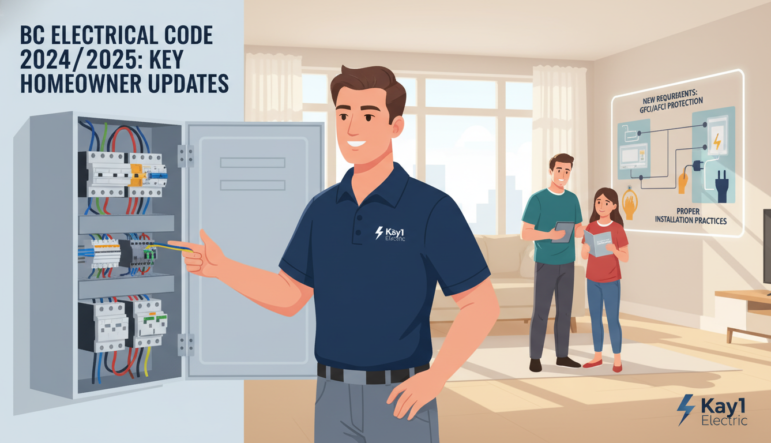
Surprising fact: British Columbia officially adopted the 2024 Canadian Electrical Code, and it takes effect March 4, 2025 — meaning permits issued after that date must follow the new standard.
We’ll introduce the most important update that will affect homeowners in 2025 and explain why it matters for home safety, resale and renovation planning.
Most existing installations won’t need retroactive upgrades, but any permitted work started after the effective date must comply with the 2024 canadian edition. We clarify what that means in plain language and what practical steps you should take before pulling a permit.
Expect changes you can feel at home: rules for EV charging demand, outdoor receptacles, energy storage, and clearer equipment labelling. We act as your trusted guide, translating technical terms into usable information.
Need help interpreting the update or planning compliant work? Call us at (778) 900-1004 for guidance across Coquitlam, Vancouver, North Vancouver and West Vancouver.
New national rules in the 2024 canadian electrical update respond to higher home power use, electrification and modern safety expectations. We’ll explain the practical effects for your home and simple steps you should take before a renovation.
Highlights for homeowners: updated EV load calculations referencing EVSE and EVEMS, added outdoor receptacle requirements for dwelling units, new provisions for home energy storage, tightened pool and spa bonding, and clearer equipment marking for maximum load.
Think in terms of triggers: new circuits, service upgrades, panel changes or any permitted renovation that needs inspection will likely follow the new rules. These requirements aim to reduce nuisance trips, lower shock and arc risk, and make inspections more predictable.
Home renovation timelines change when the province adopts a new national edition—here’s what the March 4, 2025 date means for you.
British Columbia has adopted the 2024 canadian electrical edition as the provincial standard. That means inspectors use this edition when reviewing permits issued on or after the effective date.
“Technical Safety BC ran a public consultation in February 2024 and recommended adoption without variation.”
The key timing is simple: permits issued after the date must follow the current edition. Common triggers include a new EV charger permit, a panel upgrade, or a suite permit filed in April 2025.
| Permit timing | Edition used | Typical checks |
|---|---|---|
| Before Mar 4, 2025 | Previous edition | Plans, rough‑in, final |
| On/After Mar 4, 2025 | 2024 canadian electrical | Labels, load calculations, inspections |
| On the fence? | Discuss timing | Design review before application |
Need help planning timing or permits? Call Kay1 Electric LTD at 7789001004 for straightforward guidance across Coquitlam, Vancouver, North Vancouver and West Vancouver.
We will walk you through how permits issued before the effective date are treated, and what to check at application intake.
If your permit was issued before the date, the permitted scope usually remains under the older edition for completion.
That applies while the permit stays valid and you do not change the scope. If you let the permit expire, or you add major items, the new application date will typically require the current edition.
Inspectors expect one consistent edition for a single permitted project.
Using rules from different editions for separate sections creates ambiguity in inspection standards and may cause failed inspections or rework.
Municipalities acting as delegated authorities may have local intake steps. Confirm the edition being used and any municipal transition policy at submission.
| Scenario | Edition applied | Action for homeowner |
|---|---|---|
| Permit issued before Mar 4, 2025 | Prior edition | Complete under original permit; keep records |
| Permit expired or scope increased | 2024 canadian electrical edition | Re-apply; update designs and labels |
| Delegated municipal intake | May have local policy | Confirm intake rules before application |
Questions about your application or which edition applies? Call Kay1 Electric LTD at 7789001004 for help aligning scope, permit timing, and inspection readiness in Coquitlam, Vancouver, North Vancouver and West Vancouver.
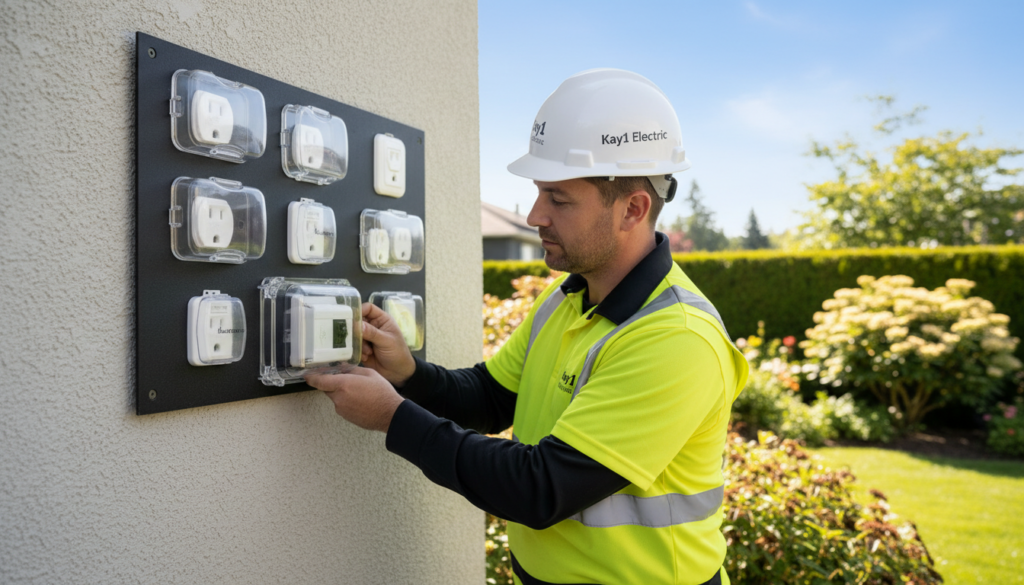
Homeowners will notice practical updates that change where and how outdoor power gets installed. These are the items that affect backyard work, hot tub buys, and what inspectors expect on labels.
The update adds clear requirements for exterior outlets to reduce reliance on extension cords. For new builds and many renovations, contractors must plan fixed receptacles on patios and yards during the early installation stage.
Bonding rules tighten for pools and spas to equalize metal parts and lower voltage gradients near water. Inspectors will also expect a dedicated disconnect placed where it is accessible and visible.
Panels and major equipment now require legible marks showing the maximum allowable load. Clear labelling helps homeowners plan future upgrades and avoids surprise service upgrades.
Common homeowner projects affected: hot tub installs, patio electrical, exterior lighting, and panel replacements. If your home has older exterior wiring or a legacy hot tub feed, confirm what can remain and what needs updating before you buy equipment.
| Project | What changes | Why it matters |
|---|---|---|
| Patio/Exterior outlets | Fixed receptacles required | Reduces extension-cord hazards; improves convenience |
| Pools/Hot tubs | Enhanced bonding & disconnects | Improves safety in wet areas; easier inspections |
| Panel work | Clear maximum load marking | Speeds permit approval; aids future upgrades |
Practical tip: Before buying a hot tub, EV charger, or major outdoor equipment, call us at 7789001004 for a site assessment in Coquitlam, Vancouver, North Vancouver and West Vancouver.
The 2024 canadian electrical update adds clearer paths for using smart load management to avoid costly service upgrades. We define the key parts so you can make an informed choice about a charger and your home service.
EVSE is the charger hardware that plugs or hardwires to your panel. EVEMS is the energy management system that throttles or sequences charging to limit peak demand.
The 2024 canadian electrical approach treats charger demand as a service load unless an EVEMS is used. Without EVEMS, inspectors expect full inclusion of charging demand in service and feeder calculations.
EVEMS can limit simultaneous draw, set a maximum calculated load, and coordinate with other major loads. When designed and labelled correctly, this often removes the need for a panel or service upgrade.
Inspectors will look for EVSE settings, EVEMS configuration, a clear “maximum calculated load” label, and commissioning records in the permit file.
Practical tip: Don’t buy a charger first. Call us at 7789001004 to assess panel capacity, choose the right EVSE, and prepare permit-ready drawings in Coquitlam, Vancouver, North Vancouver and West Vancouver.
If you’re planning backup power or solar, recent updates set specific expectations for safe installation. We explain what a home energy storage system is and how the 2024 canadian electrical update affects typical Vancouver-area projects.
A home energy storage system pairs batteries with an inverter and controls. These systems let you store solar energy or provide backup power during outages.
The update adds clear requirements for interfaces, disconnecting means, and inverter placement. Rapid shutdown options for PV make it easier for firefighters and service teams to de‑energize panels safely.
Location matters: ventilation, access to disconnects, and required clearances protect responders and speed maintenance. Expect plans, single-line diagrams, listed equipment, and labels at inspection.
Practical help: We guide design to avoid costly rework—especially where transfer switching or critical-load panels are involved. Call Kay1 Electric LTD at (778) 900-1004 for an assessment and permit support in Coquitlam, Vancouver, North Vancouver and West Vancouver.
Clear, durable markings are now a practical part of every permitted installation. The 2024 canadian electrical update pushes for legible labels that show a system’s maximum calculated demand and key EVSE settings.
Maximum allowable load is a simple statement of how much load the installation was sized to carry. That number helps you and future electricians decide if a new charger, heat pump, or kitchen upgrade needs a service change.
Good labels reduce surprise costs at resale. Buyers and home inspectors can read panel schedules and commissioning records to confirm the home meets the stated requirements.
What you should do: don’t remove labels; photograph them and store commissioning sheets with your permit and receipts. If you later change charger settings, update the label and file amended documentation so the installation stays consistent with the permitted design.
| Item | Why it matters | Homeowner action |
|---|---|---|
| Panel maximum load | Guides future upgrades | Keep panel label visible; keep photos |
| EVSE/EVEMS settings | Shows permitted charge limit | Store commissioning sheet; update if settings change |
| Load calculation sheet | Evidence for inspections & resale | File with permit documents |
Need a compliance check before inspection or resale? We can audit labels, verify settings, and collect commissioning records so you pass inspection and sell with confidence. Call us at 7789001004 for a site review in Coquitlam, Vancouver, North Vancouver and West Vancouver.
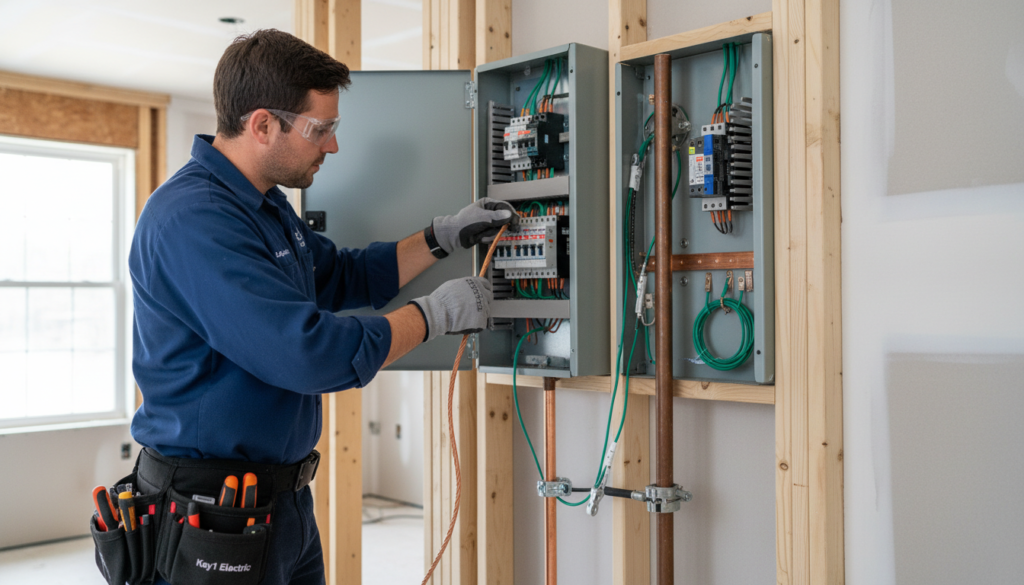
Grounding and bonding rules in the 2024 canadian electrical update aim to make homes safer and inspections clearer. These clarifications reduce surprises during renovations and help ensure fault currents clear quickly.
Grounding stabilizes the system reference to earth. Bonding ties metal parts together so faults make predictable paths back to the service and trip protection devices fast.
Recent changes simplify grounding criteria for AC systems and reintroduce isolated bonding conductors for specific installations. The rules also clarify bonding for non-electrical piping, including gas lines, which reduces stray voltages and shock risk.
The update puts extra emphasis on mitigation measures such as GFCI and AFCI protection where wet areas, garages, or outdoor loads are present.
“Clearer bonding and grounding rules mean fewer failed inspections and safer homes.”
Workmanship and documentation matter. Inspectors look for correct conductor connections, durable labels, and commissioning records. Poor connections or missing labels can delay approval and increase hazard risk.
| Item | What changed | Homeowner action |
|---|---|---|
| Grounding criteria | Simplified rules for AC systems | Confirm grounding path during assessment |
| Bonding conductors | Isolated bonding conductor guidance reintroduced | Ensure bonding continuity on metal piping and equipment |
| Shock/arc mitigation | Stronger emphasis on GFCI/AFCI in wet locations | Install and test protective devices; keep records |
Need a safety-focused assessment? Call Kay1 Electric LTD at 7789001004 for a site review and permit-ready documentation in Coquitlam, Vancouver, North Vancouver and West Vancouver.
Hidden parts of a circuit — cable supports, span limits, and conductor choice — often determine how well an installation performs over time.
The 2024 canadian updates add specific rules for supports and non‑metallic jacketed cables. These rules cut mechanical damage risk in basements, garages, and utility runs by limiting unsupported spans and requiring proper fastening.
Contractors must show where cables are fastened and how long unsupported runs will be. That reduces sag, abrasion, and strain on connectors—common causes of failures.
A new table (Table D18) maps AWG sizes to IEC metric equivalents. That alignment lowers selection errors when modern equipment lists metric requirements.
Refined voltage drop methods make calculations more consistent for long feeds to garages, garden suites, and EV chargers. Undersized conductors can cause poor appliance performance and nuisance trips.
“Passing inspection is the minimum; the goal is a safe, reliable system that performs under load.”
Want us to check a quote or review long runs for voltage drop and conductor sizing? Call Kay1 Electric LTD at 7789001004 for a site review in Coquitlam, Vancouver, North Vancouver and West Vancouver.
Home and strata projects in the Vancouver area must now factor in updated permit expectations to avoid delays and surprise costs. The adoption of the 2024 edition means new work started under permits issued after March 4, 2025 will follow the current rules.
Major renovations and any service upgrade are high on the list. Early load calculations, equipment choice, and clear permit scope reduce rework and delays.
We advise commissioning a load study before buying major gear. That keeps the project aligned with inspection expectations and avoids costly mid‑project redesigns.
Adding a suite means electrical work must sync with building safety items like smoke and CO alarms. Inspectors check both systems and paperwork in order.
Plan inspections in sequence. Integrated planning keeps timelines tight and protects occupant safety.
Strata councils should adopt EV‑ready roadmaps and staged installation plans. Controlled-load solutions and staged feeder upgrades often cut initial capital costs.
“Staged EV plans and early load studies are the most cost‑effective path for multi‑unit upgrades.”
| Project type | Main impact | Homeowner/Strata action |
|---|---|---|
| Service upgrade | Full load study and updated labels | Book assessment; plan meter and panel work |
| Secondary suite | Coordination with building safety and inspections | Integrate electrical and safety inspections early |
| Strata EV plan | Load studies; staged feeders; controlled-load options | Adopt roadmaps; schedule staged installs |
Need help? We work across Coquitlam, Vancouver, North Vancouver and West Vancouver to prepare permit-ready drawings, perform load assessments, and guide councils. Call us at 7789001004 for practical planning and on-site support.
When regulations shift, knowing where to read the rules and who can translate them matters most.
Where to look: start with Technical Safety BC’s consultation notes (Feb 5–23, 2024) and the CSA publications or accredited training providers for the full technical text of the canadian electrical code.
Why the consultation matters: Technical Safety BC recommended adoption without variation, which speeds alignment with the national cycle and makes early planning more important for homeowners in british columbia.
“Keep permit docs, labels, and commissioning sheets handy — they simplify future upgrades and resale.”
Book a code compliance or safety assessment with Kay1 Electric LTD at (778) 900-1004.
To wrap up: the 2024 canadian electrical adoption takes effect for new permits on March 4, 2025 and will shape how upgrades are designed and inspected under the current electrical code.
The homeowner bottom line is simple: the change does not force a whole‑house retrofit, but any new permitted work must meet the current canadian electrical code for that part of the project.
Highest‑impact items to watch are EV charging and EVEMS load sharing with labelling and commissioning rules, outdoor receptacles, battery/solar interfaces, and stronger equipment marking.
Do not mix editions on a single permit — inspectors expect one consistent code for the permitted scope, so plan scope and timing before you apply.
Next step: if you’re planning an EV charger, suite, panel upgrade, or battery/solar project, call Kay1 Electric LTD at 778‑900‑1004 for permit‑ready planning and inspection support.
