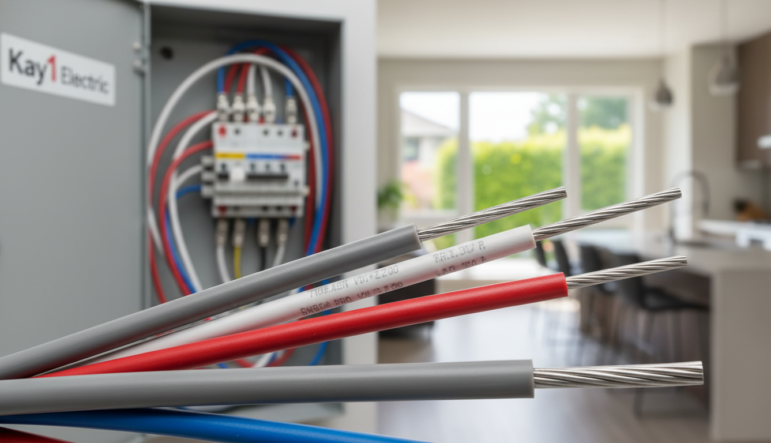
s Aluminum Wiring Safe? What Vancouver Homeowners Must Know ?
Fact: homes with pre-1972 “old technology” branch-circuit wiring are reported to be 55 times more likely to have a connection reach fire-hazard conditions than copper-wired homes, says CPSC.
We open by explaining what aluminum wiring is and why you see it in many Metro Vancouver houses built or renovated in the late 1960s and early 1970s.
The big risk is not the conductor inside the wall but the terminations. Heat cycles at outlets, switches and fixtures can loosen connections over time. That is where failures and real safety concerns occur.
In this guide we show how to identify the metal, spot warning signs like heat, smells or flicker, and weigh repair options — from approved crimps to full rewiring. We’ll also cover insurance and resale implications, and when to stop DIY work.
If you want a professional assessment in Vancouver, Coquitlam, North Vancouver or West Vancouver, call Kay1 Electric LTD at (778) 900-1004 to book an inspection.
Key Takeaways
- Pre-1972 homes may have older aluminium branch-circuit systems that need inspection.
- The most common danger is at connections—outlets, switches and fixtures—not the conductor inside walls.
- Approved repairs like COPALUM crimps are reliable; quick fixes can create new hazards.
- Insurers often ask about this condition; a professional report can affect coverage and resale.
- If you notice heat, odours, flicker or sparking, stop and call a licensed electrician.
- For a local assessment, contact Kay1 Electric LTD at (778) 900-1004.
Why older aluminum wiring can become a fire hazard in Canadian homes
During a brief era in the 1960s and 1970s, builders switched to a less costly conductor; that decision still affects homes today.
When this conductor was used and what it means for your house
From about 1966 to 1974 many Canadian builders installed aluminum branch‑circuit conductors as a cost response to copper price spikes. If your home was built or expanded in those years, there’s a reasonable chance those branch circuits are present.
Why terminations fail over time
Current flow heats a connection. Heat causes expansion; cooling causes contraction. Repeated thermal cycling opens tiny gaps at screws and terminals.
Air enters those gaps and forms oxide. Aluminum oxide is less conductive, so resistance rises and the joint heats more. That feedback can lead to arcing—electrical “jumping” across a gap—which is one of the most serious fire pathways.
Material drawbacks compared with copper
Compared with copper, this metal has higher resistance, deforms under screw pressure (cold flow), and can corrode when paired with dissimilar metals in damp areas. Those traits increase the chance of loose connections and long‑term safety problems.
Data matters: inspection literature and regulator reports show pre‑1972 systems reach hazardous conditions at terminations far more often than equivalent copper systems. For clarity on risk and next steps, call Kay1 Electric LTD at 7789001004 for a local inspection.
How to identify aluminum wiring in your home safely
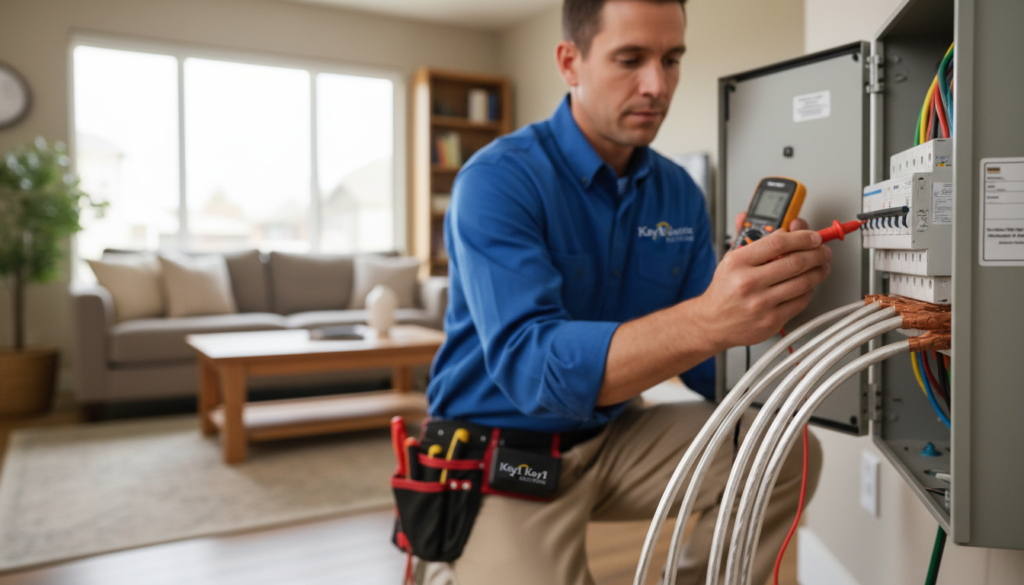
A simple, non-invasive check around your panel and attic can reveal what type of conductor your home uses. Do not remove covers or touch live parts unless you are trained. If you feel unsure, stop and call a licensed electrician.
Where to check first
Look at exposed cable near the electrical panel, in the attic, and in the basement where the jacket is visible. Check the outer sheath for printed or embossed markings such as AL, ALUM or the word aluminum.
Lighting and age can disguise colour, so do not rely on insulation hue alone. If you see runs that look different from other wires, note their paths and locations for a professional report.
What device labels can reveal
Examine receptacles and switches for markings like CO/ALR, CU‑AL or AL‑CU. These labels indicate devices made to accept both copper and aluminum terminations.
Home inspectors will report observed solid metal branch circuits but they don’t reterminate connections. If labels or jacket marks suggest older conductor, schedule a full electrical inspection rather than guessing about safety or insurance compliance.
Need help? Call Kay1 Electric LTD at 7789001004 for a local inspection in Coquitlam, Vancouver, North Vancouver or West Vancouver.
Aluminum Wiring Issues: how to reduce risk, pass inspection, and protect your insurance
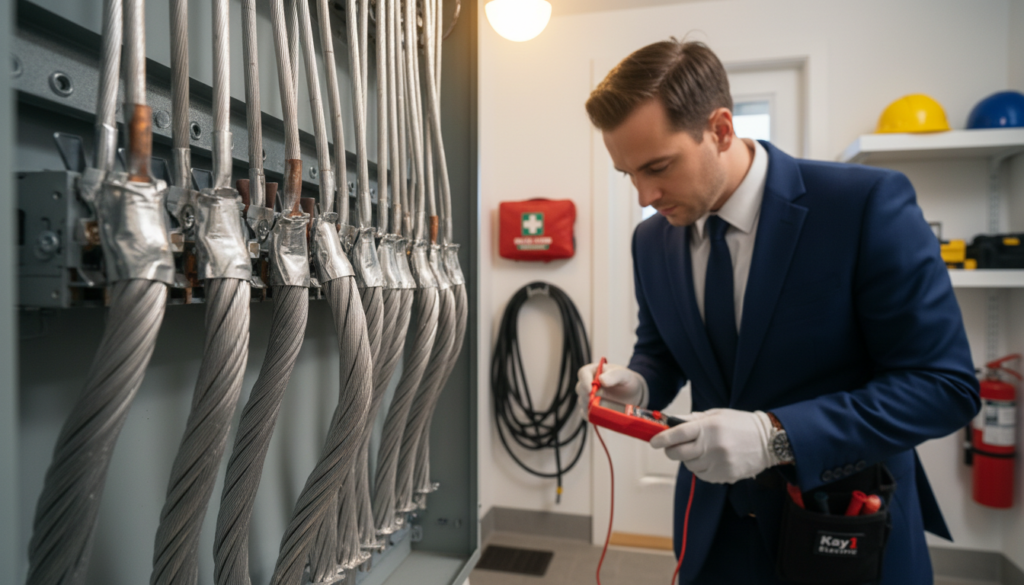
If you own a mid‑century home in the Lower Mainland, taking action now can prevent small faults from becoming a serious fire hazard.
Warning signs to act on immediately:
- Warm outlets or faceplates when not heavily loaded.
- Flickering or dimming lights, crackling or visible sparking.
- Burning odours, smoke or discolouration around switches and outlets.
These symptoms usually show at high‑use points — outlets, switches and fixtures — and can mean arcing or loose connections. Don’t wait to see more damage; call for an inspection.
Inspection and insurance: Schedule a professional evaluation if your home was built in the 1965–1974 window, after renovations, or before a sale. Insurers commonly request a Certificate of Inspection to confirm remediation. We provide detailed reports to satisfy adjusters and help protect your coverage.
Remedies and costs: The two accepted fixes are full copper rewiring (most permanent) or COPALUM crimp connectors installed with the correct tooling. Pigtailing can work if done with listed connectors, but improper connectors or sloppy work can worsen the hazard. Expect Canadian rewiring in the $8,000–$15,000 range for a typical 1,500–3,000 sq ft home; actual price depends on access, device count and panel condition.
Choosing an electrician: Pick electricians experienced with older branch circuits and approved remediation methods. Look for transparent quotes, willingness to document work for insurers, and local experience in Coquitlam, Vancouver, North Vancouver and West Vancouver.
Need help? We’re here to inspect, advise or remediate — call Kay1 Electric LTD at (778) 900-1004 for a prompt assessment.
Conclusion
In summary, the real danger in older branch circuits lies where conductors meet devices, not the runs in the walls.
Data: pre‑1972 systems show a far higher rate of connection fire‑hazard conditions, so we treat terminations as the priority.
Start by confirming whether you have aluminium conductors, then book an electrician‑led inspection that focuses on outlets, switches and light fittings.
Reliable outcomes depend on correct devices or approved connectors, qualified installation, and proper documentation for insurance or sale. Copper rewiring or certified connector remediation are the accepted paths.
If you want us to help verify safety, reduce risk and prepare paperwork, call Kay1 Electric LTD at (778) 900-1004 for service in Coquitlam, Vancouver, North Vancouver and West Vancouver.
FAQ
Is aluminium wiring safe? What should Vancouver homeowners know?
Older aluminium conductors present higher fire risk than modern copper installations when connections degrade. If your home was built or renovated in the 1960s–1970s, we recommend a targeted inspection of branch circuits and terminations. A licensed electrician in Coquitlam or Vancouver can verify materials, test for overheating, and advise on repairs that meet insurance requirements. Call Kay1 Electric LTD at 778‑900‑1004 for an assessment.
When was this metal commonly installed in Canadian homes and why does it matter?
That wire was widely used from the late 1950s through the early 1970s because it cost less than copper. Homes with installations from that era are more likely to have legacy conductors. Age matters because older alloys and installation practices are linked to higher failure rates at connections, so older systems need closer scrutiny during property inspections or when selling.
Why do connection points fail over time: what causes expansion, gaps, oxidation, and arcing?
Conductors expand and contract with temperature cycles. Over years this movement loosens screw or clamp terminations, creating gaps. Oxidation on the conductor surface increases resistance; higher resistance produces heat that worsens loosening and can lead to arcing. Together these factors make connection points the primary failure location.
How do the material properties compare with copper for resistance, corrosion, and deformation under screw pressure?
This metal has higher electrical resistance than copper and is softer mechanically. It oxidizes differently and can cold‑flow or deform under screw pressure. Those traits increase the chance of a poor contact if the wrong hardware or torque is used. Copper remains the more stable, long‑term choice for terminations.
What does the data say about risk in older systems, including pre‑1972 “old technology” wire?
Studies and insurance loss data show a higher incidence of connection‑related fires in pre‑1972 installations, which used older alloys and joining methods. While not every home with legacy conductors will have a problem, risk increases with age, poor maintenance, and DIY modifications that don’t follow current standards.
How can I identify this type of conductor in my home safely?
Do not disturb live wiring. Safely inspect labelled jackets in attics, basements, or unfinished closets for markings such as “AL” or “ALUM.” The electrical panel rim and cable entry points are good places to look; visible discolouration or odd‑shaped strands may also indicate older materials. When in doubt, hire an electrician to confirm.
What device labels give clues: CO/ALR, CU‑AL, and AL‑CU—what do they mean?
Device labels show compatibility. CO/ALR and CU‑AL indicate the device is intended for use where copper and that metal meet or for legacy installations. AL‑CU typically indicates a connector rated for joining aluminium to copper. Using the correct labelled devices reduces risk; unlabelled or incompatible hardware can create hazardous connections.
What warning signs should prompt immediate action—warm outlets, flickering lights, odours, sparking or smoke?
Any of those signs are urgent. Warm or discoloured outlets, intermittent power, burning smells, or visible sparking require you to stop using the affected circuit and call a licensed electrician right away. These symptoms suggest overheating or arcing at a termination and pose a real fire hazard.
When should I book a professional inspection and why does a Certificate of Inspection matter to insurers?
Book an inspection if your home was built before the 1980s, when you notice warning signs, or before selling. Insurers often require documentation that electrical hazards have been addressed; a Certificate of Inspection from a licensed contractor can satisfy underwriting requirements and may prevent coverage issues.
What are permanent fixes versus partial fixes: copper rewiring compared with COPALUM crimp connectors?
Full replacement of branch circuits with copper is the most permanent solution and eliminates material‑related risk. COPALUM crimping is an industry‑accepted permanent repair where a special crimp and aluminium‑to‑copper transition is formed; it is announced by manufacturers and accepted by many insurers. Partial or informal fixes may leave risk if not done to standard.
What is “pigtailing” and what can go wrong if the wrong method or hardware is used?
Pigtailing joins a short copper lead to the legacy conductor so existing devices can be replaced with copper‑rated parts. If installers use unapproved connectors, improper crimps, or devices not rated for mixed metals, the connection can overheat. Always use approved methods and a certified electrician familiar with local code and insurers’ expectations.
Why do mixed aluminium‑to‑copper connections increase hazard if improper connectors are used?
Direct contact between dissimilar metals causes galvanic corrosion, which increases resistance at the joint and generates heat. Proper transition connectors or CRIMP systems create a stable, conductive joint and prevent corrosive reactions; improper connectors fail to control those effects and elevate fire risk.
What cost expectations should I have in Canada for upgrading from legacy conductors to copper, and what affects price?
Costs vary by home size, accessibility, number of circuits, and whether walls must be opened. Full rewiring is the most expensive route; COPALUM or approved transition repairs cost less but still require skilled labour and certified materials. Labour rates in Vancouver and North Vancouver, permit fees, and required panel or device upgrades also affect total price.
How do we choose the right electrician in Vancouver for this work?
Choose a licensed, insured electrical contractor experienced with legacy conductors and recognized repair methods. Look for local references, clear written estimates, and knowledge of insurer expectations. Kay1 Electric LTD serves Coquitlam, Vancouver, North Vancouver and West Vancouver—call 778‑900‑1004 to schedule an inspection or get a quote.