608 Como Lake Ave, Coquitlam, Vancouver, V3J0B2
07:00 AM - 09:30 PM
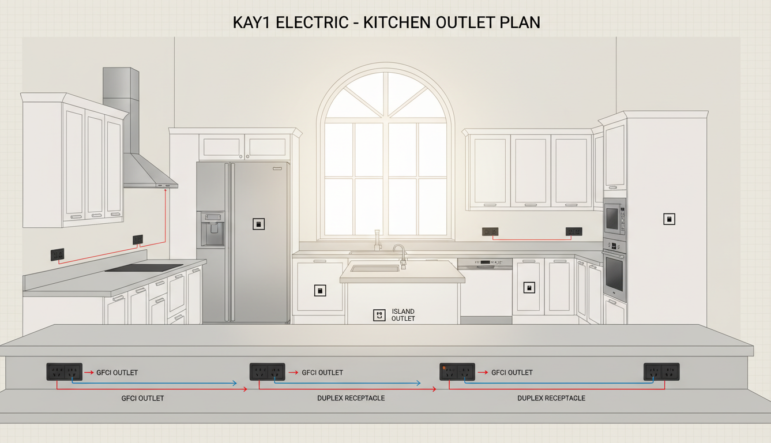
Surprising fact: nearly 40% of modern home power use concentrates in the cooking area, and poor outlet placement causes tripped breakers and daily frustration.
We introduce why this wiring is the hidden system that makes a new kitchen feel effortless or clumsy once appliances and lighting run daily.
In this guide we show where to place outlets and a switch, how to think about circuit loads, and how to match the electrical plan with how you actually use the room.
Safety and code compliance are non-negotiable in Canada. Our advice stays practical for homes and small commercial spaces.
Thoughtful outlet and switch locations cut extension cords, clutter, and trip hazards while improving workflow at prep, cook, and clean-up zones.
When you want the plan checked before walls close, book help with Kay1 Electric LTD — we serve Coquitlam, Vancouver, North Vancouver, and West Vancouver. Call (778) 900-1004 to schedule a consultation.
The easiest way to avoid mid-project surprises is to map every appliance and work zone before demo.
Before walls come down, make a precise inventory. List every appliance, every light fixture, and every zone you use daily. Include occasional devices — mixers, air fryers, and party gear.
Map the layout to match real behaviour. Note where you prep, where the coffee station sits, and where the island will host guests or homework. Cabinet moves, backsplash choices, and island size change outlet and switch needs.
Next step: book a pre-rough-in wiring consultation with Kay1 Electric LTD in Metro Vancouver. Call (778) 900-1004 to review your plan and protect function and budget before drywall goes up.
Modern appliances demand a carefully planned circuit layout to avoid nuisance trips and protect equipment.
We separate loads so heavy appliances run on their own lines. That keeps your daily use steady and reduces breaker trips.
High-draw devices like induction ranges and built-in microwaves can trip shared breakers. Dedicated lines keep each appliance reliable and safe.
The CEC requires at least two 20A SABC for countertop outlets. That rule reduces overloads when many appliances run together.
Homeowner checklist:
We help Coquitlam and Vancouver homeowners match an electrical plan to real life. Call Kay1 Electric LTD at 7789001004 to review your project and meet code and safety standards.
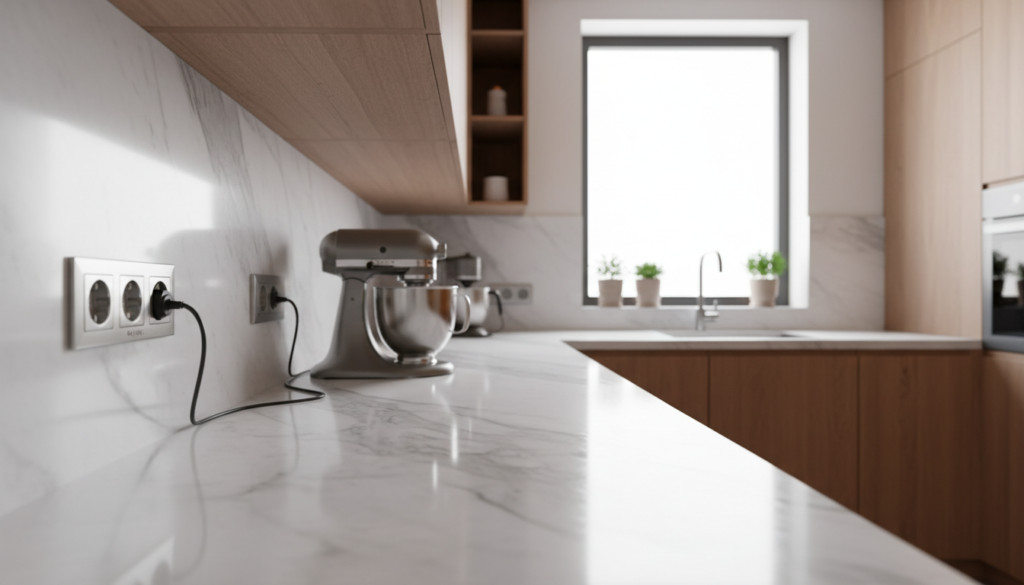
A simple spacing rule for counters saves time and prevents unsafe extension-cord use. Place outlets so devices sit near plugs and cords do not cross sinks or main walk paths.
Follow the common rule of thumb: have an outlet within 2 feet of each counter edge and no more than 4 feet between receptacles along a continuous wall. That spacing keeps cords short and reduces clutter.
Plan outlets at prep zones and coffee stations where appliances live. Keep grinders, kettles, and espresso machines on a dedicated counter run so cords do not cross landing zones for hot pans.
Designate appliance “parking” areas with hidden plugs behind mixers and toasters, and place at least one easily reachable outlet for occasional use. This keeps the counter tidy without losing function.
| Placement | Typical spacing | Practical example |
|---|---|---|
| Counter edge to outlet | Within 2 ft | Plug point near a prep sink or chopping area |
| Between outlets on a wall | Max 4 ft | Continuous counter with toaster and blender spots |
| Coffee / appliance parking | Clustered or hidden outlets | Multiple plugs behind a coffee station; one front outlet for grinders |
We recommend reviewing your plan with a licensed pro before rough-in. Call Kay1 Electric LTD at 7789001004 to confirm layout, meet code, and keep counters safe and functional.
A well-placed receptacle on an island keeps daily tasks flowing and prevents last-minute hacks. Islands typically require at least one outlet, and larger islands often need a second or a pop-up to handle prep, serving and charging without clutter.
At minimum, plan one easily reachable outlet for an island. For islands with seating or multiple appliances, add a second outlet or cluster of plugs.
Pop-up and flush-mount units keep the look uncluttered while giving full power when needed. They preserve the countertop look and reduce visible cords.
The island outlet should come from a 20A small-appliance branch circuit, not a lighting or general-purpose circuit. That keeps load balanced and avoids inspection issues.
We review island plans across Coquitlam and Vancouver to match code with real use. Call Kay1 Electric LTD at 7789001004 to confirm your electrical plan before rough-in.
Where water and power meet, smart protection is the single best defence.
What a GFCI does: a ground-fault circuit interrupter senses leakage to ground and cuts power in milliseconds. This reduces shock risk where moisture is present.
In Canada, GFCI protection is required for all outlets serving counters and for any receptacle within 1.5 metres of a sink. Plan these locations early so outlets serving kitchen counters are done right the first time.
Practical implications: GFCI choices affect breaker selection and the type of receptacle you install. If a protected circuit trips, troubleshooting is simpler when you know which outlets are on the same feed.
Standards and safety are not optional. We recommend you have a licensed electrical contractor verify protection locations before cabinetry and backsplash are final. Also, place plugs so cords never drape toward a sink — good design prevents hazards even with GFCI in place.
If you need help meeting code in Coquitlam or Vancouver, call Kay1 Electric LTD at 7789001004.

Thoughtful switch layout turns dark corners into safe, usable spaces without extra trips back and forth. Place controls so you can enter and light the room from every major doorway.
Locate a primary switch at each entry. For large rooms with a patio or garage door, use three-way switching so a single light is controllable from both sides.
Assign separate switches to under-cabinet runs, pendants over islands, and accent fixtures. Prefer dimmers where you want mood control and energy savings.
| Location | Control | Why |
|---|---|---|
| Hall entry | 3-way switch | Access from both doors |
| Prep side | Dedicated dimmer | Task lighting control |
| Feature area | Independent switch | Accent on/off |
Coordinate with your electrician before drywall so switch legs and controls are roughed in to meet local standards and inspection needs. Call Kay1 Electric LTD at 7789001004 for a review in Coquitlam, Vancouver, North Vancouver, or West Vancouver.
A three-layer plan for light separates overall glow from task-specific beams and subtle accents. We recommend thinking of the scheme as ambient, task, then accent so the room feels bright and practical.
Ambient lighting provides general illumination. Recessed pot lights work well for even coverage. Flush-mount ceiling fixtures suit lower ceilings and deliver broad light.
Task lighting focuses where you work. Under-cabinet runs remove shadows on the counter and make prep safer. Pendants or dedicated fixtures over the range and sink add focused beams for cooking tasks.
Accent light highlights glass cabinets, toe-kicks and architectural details. These low-level accents add depth and offer useful night-time guidance with minimal power draw.
Dimmers let you tune ambiance and save energy. Smart controls automate scenes and reduce wasted power over time. Decide on dimmer locations and transformer placements early in the rough-in process.
| Layer | Common fixtures | Wiring notes |
|---|---|---|
| Ambient | Pot lights, ceiling fixtures | Even spacing; loop to switches |
| Task | Under-cabinet runs, pendants | Separate switch; transformer for low-voltage |
| Accent | Toe-kick, cabinet strips | Low-voltage runs; dedicated dimmer |
We review lighting and wiring plans across Coquitlam and Vancouver to match design goals with code and function. Call Kay1 Electric LTD at 7789001004 to schedule a review before drywall.
Hidden power points are the details homeowners notice only after the space is finished. We list common spots that save time and keep counters tidy.
Place a dedicated outlet in the pantry for vacuum chargers and small secondary appliances. This keeps bulkier items off counters and ready to use.
Tip: Mount the receptacle a few inches up from the shelf so cords stay tidy and devices charge safely.
Charging drawers and integrated USB-A/USB-C ports create a family drop zone for phones and tablets. Add these near an island seating area or the desk nook for convenience.
We recommend at least one USB-capable outlet in a central spot to reduce clutter and keep devices powered without adapters.
Power inside cabinets, drawers or appliance garages is subject to code and safety rules. Receptacles in enclosed spaces often require interlocks, relays, or automatic shutoffs when doors close.
Make sure you plan these features before rough-in so safe controls and proper circuits are roughed in. Improvised wiring risks trips and fails inspection.
| Location | Common use | Code note |
|---|---|---|
| Pantry shelf | Vacuum charger / spare appliance | Standard 15A/20A GFCI as applicable |
| Charging drawer | Phones, tablets | Installed with insulated box and access for service |
| Appliance garage | Toaster/coffee machine tucked away | Requires door-interlock or automatic de-energize |
We plan these upgrades to hide power while keeping access simple. For compliance and clean design in Coquitlam, Vancouver, North Vancouver, and West Vancouver, call Kay1 Electric LTD at 7789001004 to review your plan before walls close.
Permits and inspections protect your home and ensure the work meets provincial safety rules.
When an electrical permit is required
Major changes—moving receptacles, adding new circuits, or upgrading a service panel—typically need an electrical permit in Canada.
Skipping permits risks failed inspections, insurance problems, and unsafe installations.
How inspections fit into the timeline
Inspectors must usually see rough‑in wiring before drywall goes up. Book the inspection early so trades can stay on schedule.
After rough‑in passes, final inspections follow once finish work is complete.
How to verify licensing and prioritise safety guidance
Ask for proof of licence and evidence they follow Electrical Safety Authority guidance. In Ontario, confirm ESA/ECRA credentials where applicable.
Make sure the contractor will handle permits and coordinate inspections as part of their service.
We work across Coquitlam, Vancouver, North Vancouver, and West Vancouver to align design, permitting, and execution. Call 7789001004 to hire licensed help and keep your project compliant and safe.
Good upfront planning often separates a flawless final space from costly fixes later.
We recap the core takeaways: start with how you use the kitchen, plan circuits for modern appliances, place outlets to cut cords, and layer lighting so every work surface is lit.
Make these choices early. Once cabinets and drywall are in, changes cost more time and can harm design.
Safety is part of every decision — GFCI protection, correct circuiting, and compliant placement keep your home protected. Keep future needs in mind: smart lighting, charging points and appliance upgrades extend usability.
If you want a plan reviewed or built, call Kay1 Electric LTD at (778) 900-1004 — call 7789001004 — to book a consultation in Coquitlam, Vancouver, North Vancouver, or West Vancouver.
