loading
608 Como Lake Ave, Coquitlam, Vancouver, V3J0B2
07:00 AM - 09:30 PM
608 Como Lake Ave, Coquitlam, Vancouver, V3J0B2
07:00 AM - 09:30 PM
Post Image
23 Jan, 2026
Posted by kay1electric
0 comment

Level 1 vs Level 2 EV Chargers: Which One Do You Need ?

Did you know that many Vancouver drivers only use public stations for long trips, yet most daily travel can be met with a simple home plug? This gap shapes the real decision: not which tier wins, but which fits your routine.

We define the options by practical facts. The slow option uses a standard 120V outlet and keeps upfront costs low. The faster option runs on 208–240V and cuts recharge time, but needs more complex installation.

What matters most are your daily kilometres, parking setup, and electrical panel capacity in the Lower Mainland. Your vehicles — full battery electrics or plug-in hybrids — and commute pattern change what is “enough” power.

We help homeowners and businesses in Coquitlam, Vancouver, North Vancouver and West Vancouver assess needs and plan upgrades. For a quick quote or panel check, call Kay1 Electric LTD at (778) 900-1004.

Key Takeaways

  • Choose by daily use, parking and panel capacity — not by marketing claims.
  • Slow option suits light daily travel and minimal cost.
  • Faster option saves time but adds installation work and expense.
  • Your vehicle type and commute define how much power you need.
  • Many start slow and upgrade when daily demands grow.
  • Call Kay1 Electric LTD at (778) 900-1004 for a local assessment.

EV charging levels explained for Canadian drivers

Understanding how charging tiers work helps you match electricity to your driving routine. In plain terms, a charging level describes electrical output and how quickly your electric vehicle adds usable range.

What the AC options mean

Most passenger models accept two common AC options at home or work. The vehicle converts alternating current to direct current internally, so the outlet type affects how fast range returns.

Where each option fits

At home, a standard outlet often suffices for light daily use in single‑family houses and townhomes. Workplaces and condo visitor areas frequently offer faster options for daily top‑ups.

Public stations and commercial lots supply quicker fills and DC fast options for long trips or quick errands. Treat public charging as a supplement, not the core of your routine.

We help homeowners and business owners across Coquitlam, Vancouver, North Vancouver and West Vancouver choose the right setup. Call Kay1 Electric LTD at (778) 900-1004 for a panel check and site guidance.

Level 1 vs Level 2 Charging: the key differences that matter

Choosing the right home EV setup comes down to power, speed and how much range you need each day. We compare voltage, kW output and real-world range so Vancouver homeowners and businesses can plan installs that fit routines.

Voltage and power output

Standard outlets run about 120V and deliver roughly 1.2–2.4 kW. Hardwired units use 208–240V and span ~3 kW to under 20 kW, with many homes around ~7.6 kW.

Charging speed and range per hour

Expect about 5 km per hour on the lower-output option and roughly 30–50 km per hour on higher-output units. Higher kW directly means more range per hour, but vehicle limits matter.

Time to fully charge

Higher-output setups often fill a typical EV overnight. Lower-output units may only top up enough for a daily commute, not a full battery in a single night.

Connector compatibility

Most passenger cars use J1772. Tesla owners can use a J-plug adapter for non‑Tesla high-output units. Connector choice affects hardware and future flexibility.

  • Practical tip: match charger power to your commute and panel capacity.
  • Need help? For a site-specific recommendation and clean install in Vancouver, call Kay1 Electric LTD at (778) 900-1004.

Level 1 charging at home using a standard outlet

For many Vancouver homeowners, a simple wall outlet is the most convenient way to top up an EV overnight. This option plugs into a standard 120V receptacle and often comes with the vehicle, so upfront cost is minimal.

Realistic performance: slow recovery for low daily kilometres

Expect about 2–5 miles per hour of recharge (~5 km/hour). That means a modest daily commute can be covered with overnight charging, but a large battery may take up to ~24 hours to fully charge.

Best-fit vehicles and owners

This option suits plug-in hybrids, a secondary vehicle, or owners who rely on public stations for long trips. As a backup charging method, it keeps routines simple around Vancouver, Coquitlam and the North Shore.

Practical limits and safety basics

When multiple drivers or long commutes are routine, the outlet can fall behind. Winter efficiency drops and larger vehicle batteries make the slow pace impractical.

  • Safety: use a good-condition outlet, avoid extension cords, and dedicate the circuit.
  • Clarity: the “level level” confusion often masks that you may need no extra purchase to start.

If your home setup is slow, trips breakers, or can’t keep pace, call Kay1 Electric LTD at (778) 900-1004 for a fast site assessment and next-step advice.
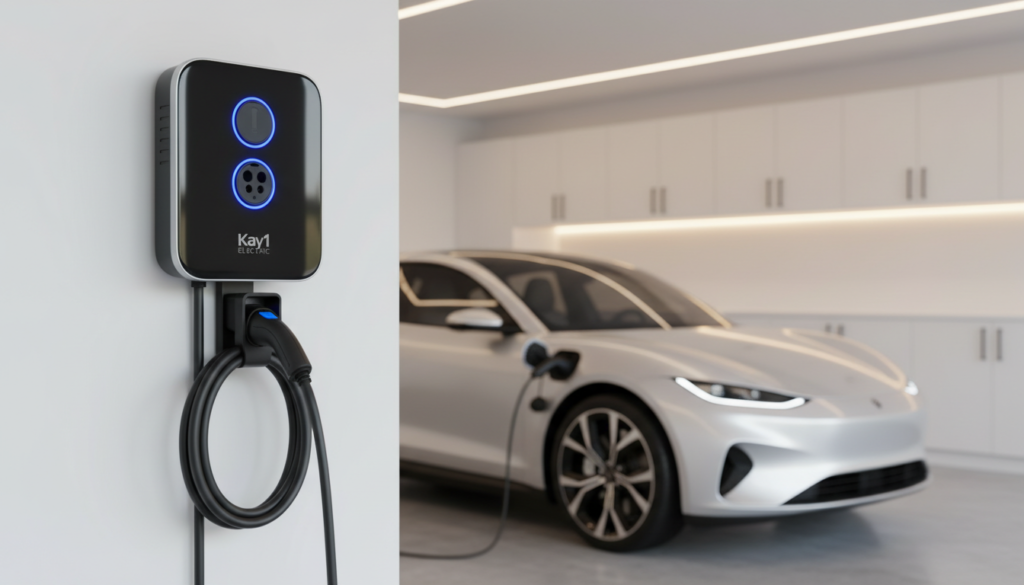
Level 2 charging for faster home and workplace charging

A modern Level 2 home EV charger by "Kay1 Electric" is prominently displayed in the foreground, showcasing its sleek design with a glossy black finish and illuminated charging ports. The charger is mounted on a white wall in a well-lit garage setting, ensuring an ambiance of cleanliness and organization. In the middle ground, a charging cable elegantly drapes down, neatly coiled, leading to a simulated electric vehicle parked nearby. The background features a spacious garage with minimalistic storage and soft ambient lighting that highlights the modernity of electric vehicle infrastructure. The overall atmosphere exudes efficiency and sophistication, suggesting a reliable solution for home and workplace charging needs. The depth of field focuses on the charger, creating a slight blur in the background for a professional and polished look.

A 240V home setup gives you reliable, faster fills that fit day-to-day life in Vancouver. It uses a dedicated circuit and raises charging speed so most drivers wake to a morning-ready battery.

Typical home setup: NEMA 14-50 vs hardwired EVSE

Many owners choose a NEMA 14-50 outlet for a plug-in charger. That keeps future flexibility and is simpler to install.

Hardwired EVSE units give a cleaner look and often higher continuous power. We assess your panel and recommend the right installation approach.

Charging convenience and reduced range anxiety

At typical rates you can add about 30–50 km per hour, so overnight top-ups cover most commutes. That predictability cuts emergency station stops and eases winter concerns.

Smart features for cost and load control

Modern units offer scheduling for off-peak power and basic power management to balance household loads. These features save money and protect your panel.

  • Workplaces: smart chargers are a tenant perk and support local business needs.
  • Sizing: not all vehicles or chargers charge at max rate—match equipment to service capacity.

We plan upgrades across Coquitlam, Vancouver, North Vancouver and West Vancouver. Call Kay1 Electric LTD at (778) 900-1004 to book a Level 2 consultation and installation plan.

Cost comparison in Canada: equipment, installation, and operating costs

Buying a faster home unit is only part of the bill — installation and panel upgrades often dominate final costs.

We break down the true Canadian cost drivers so you can budget accurately. Equipment, labour, permits and any electrical upgrades are the main items to plan for.

Upfront costs

The minimal option often needs no purchase because the car includes a cord that uses an existing outlet. For faster units, expect a wide range: common consumer models sit roughly between $300 and $2,500 depending on amperage, smart features and cable length.

What drives installation price

Installation costs hinge on four things:

  • panel capacity and whether the service must be upgraded;
  • distance from the panel to the parking spot and whether routing is inside finished walls;
  • trenching or conduit runs for detached garages;
  • permits, labour rates and any required load management gear.
Expense Typical Canadian range Notes
Basic equipment $300 – $1,000 Simple models with fewer smart features
Premium equipment $600 – $2,500 Higher amperage, Wi‑Fi, longer cable
Installation & permits $300 – $4,000+ Depends on panel upgrades, trenching and labour
Panel/service upgrade $1,000 – $5,000+ Major cost if meter or service increase is needed

Long-term value

Operating costs per km are similar across options; electricity is the main ongoing expense. The real value comes from saved time and convenience.

We help homes and businesses in Coquitlam, Vancouver, North Vancouver and West Vancouver weigh equipment versus site work. Call Kay1 Electric LTD at (778) 900-1004 for a site-specific quote and honest cost breakdown.
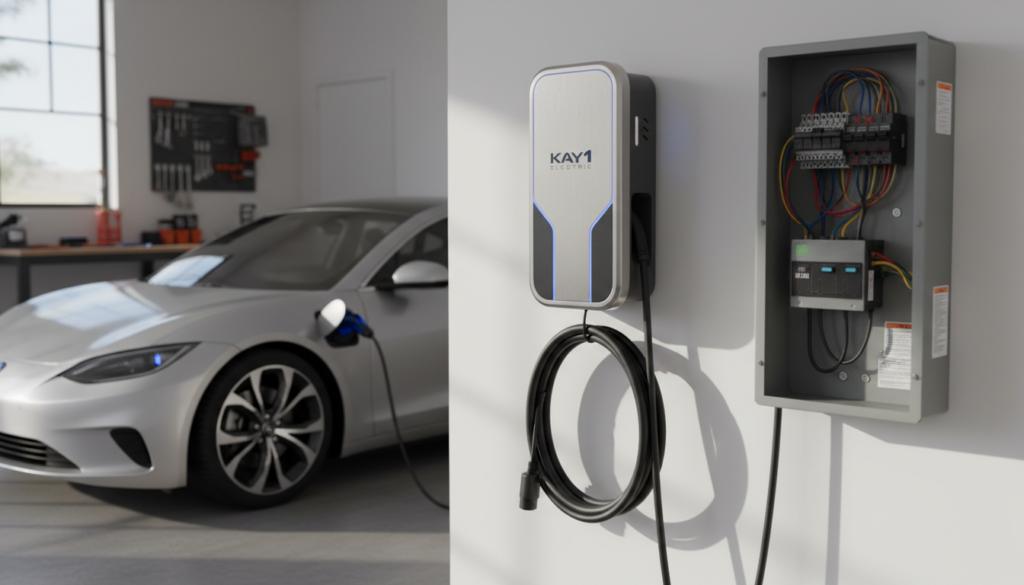
Installation and electrical considerations for Level 2 chargers

A detailed close-up of a Level 2 electric vehicle charger installation, showcasing a sleek, modern Kay1 Electric charger mounted on a pristine white wall in a well-lit garage setting. In the foreground, focus on the charger with clear features like the charging cable and LED indicators. The middle ground should include electrical panels and wiring, emphasizing the complexity and safety of the installation process. The background displays a parked electric vehicle, subtly indicating its connection to the charger. Natural light streams through an adjacent window, enhancing the sleek, professional atmosphere, while shadows add depth. The overall mood is clean, technical, and informative, suitable for an expert audience. No text or human figures are included.

Before buying, inspect your electrical service so the new equipment works reliably and safely. A short site review shows whether your panel can accept a dedicated circuit and which outlet option suits your parking.

Dedicated circuit and panel capacity

We check panel space, main service rating and existing loads. A dedicated breaker prevents nuisance trips and keeps continuous power steady.

Practical check: confirm breaker sizing, available amperage and any panel upgrade needs before you commit.

Permits, code compliance and placement

Permits and inspections protect safety, insurance and resale. Whether the unit sits in a garage or outside, use weather‑rated hardware and tidy cable management.

Load management and multi‑EV planning

Smart load sharing avoids costly service upgrades. These systems stagger power so multiple drivers meet evening needs without overloading the panel.

“A correct install equals fewer trips, safer operation and predictable charging hours overnight.”

Choosing an electrician

  • Ask about licensing, permit handling and a detailed cable routing plan.
  • Request breaker sizing, commissioning tests and a clear warranty.

We handle site reviews and clean installs across Coquitlam, Vancouver, North Vancouver and West Vancouver. Call Kay1 Electric LTD at (778) 900-1004 to book an assessment.

How public charging stations and DC fast charging fit into the decision

High-power DC hubs give quick fills on highways, yet most drivers still rely on home power each day.

Why DC fast is different: these stations deliver roughly 50–350 kW of direct current. That can add large chunks of range in under an hour for many evs. Fast hubs use CCS, CHAdeMO or Tesla‑specific plugs, so connector type matters when you plan stops.

Where public stations work best

Public charging stations are ideal for road trips, quick top-ups during errands, or when you can’t access home power. You’ll find DC fast sites along major Canadian corridors and at busy hubs: highway rest stops, shopping centres and travel nodes.

When public charging is a supplement, not a replacement

For daily life in Metro Vancouver, dependable home or workplace power reduces stress and cost unpredictability. Public stations are more expensive per kWh and can be busy or offline.

  • Good supplement: condo residents with limited wiring, temporary renters, or businesses offering customer service.
  • Less ideal: relying on stations nightly increases time on the road and adds uncertainty to range planning.

We design home and workplace setups so you wake with range and avoid frequent trips to public stations. Call Kay1 Electric LTD at (778) 900-1004 for advice and installations across Coquitlam, Vancouver, North Vancouver and West Vancouver.

Conclusion

Pick the home setup that replaces the kilometres you drive with the hours your car sits parked.

For many drivers, the real choice hinges on recovery speed. The lower-output option gives about ~5 km per hour, while the higher-output option adds roughly 30–50 km per hour. Think about your daily routine, battery size and how long your vehicle stays plugged in.

How to decide: match your daily km, available parking hours, panel capacity and whether you need smart controls for off‑peak use. That simple frame keeps costs and convenience in balance.

We install and assess local homes and businesses across Coquitlam, Vancouver, North Vancouver and West Vancouver. For the right charger and a safe, tidy install, call Kay1 Electric LTD at (778) 900-1004.

FAQ

What are the main differences between slow outlet charging and higher-voltage home charging?

Slow outlet charging uses a standard 120 V household receptacle and provides low power suited for short daily drives or plug-in hybrids. Higher-voltage home charging uses 208–240 V equipment and delivers several times the charging speed, cutting overnight charge time significantly. The higher-voltage option requires dedicated wiring and often a dedicated circuit in your panel. For Coquitlam and Vancouver homeowners, we recommend a site assessment to confirm panel capacity before upgrading your setup. Call us at 7789001004 for an inspection.

How do charging speeds translate to real driving range added per hour?

Charging speed depends on the charger power (kW) and the vehicle’s onboard charger. A low-power outlet typically adds around 8–16 km of range per hour, while a 7–11 kW home unit commonly adds 35–55 km per hour. Faster home units and public fast chargers add more, but those require different equipment. We can estimate your range-per-hour based on your EV model and typical daily kilometres—phone 7789001004 for a quick calculation.

What kind of connector will my EV use at home and at public stations?

Most EVs in Canada use the J1772 connector for AC charging; Tesla vehicles include an adapter for J1772. Public stations follow the same standard for AC, while DC fast chargers use different plugs (CCS or CHAdeMO) depending on location. When installing at home, we ensure the charger matches your vehicle’s inlet or provide compatible adapters when needed.

Is a standard outlet ever a practical long-term solution for an EV owner?

A standard outlet can be practical if you drive low kilometres daily, own a plug-in hybrid, or need a backup charging option. It becomes impractical for most fully electric vehicles used as primary cars with moderate-to-high daily travel because recharge times grow long and offer limited flexibility.

What does a typical home higher-voltage charging installation involve?

A typical installation includes a dedicated 208–240 V circuit, a properly rated breaker, and either a hardwired EVSE or a NEMA 14-50 outlet. We assess panel capacity, route wiring with minimal impact, and mount the unit in a garage or suitable outdoor location. Permits and inspected work ensure code compliance in Vancouver-area municipalities.

How much should I budget for equipment and installation in Canada?

Equipment ranges from minimal cost for a basic cord set used with a standard outlet to several hundred or over a thousand dollars for a smart 7–11 kW EVSE. Installation varies widely: simple indoor installs with available panel capacity can be moderate, while long cable runs, panel upgrades, or trenching raise costs. We provide clear estimates after a site visit—call Kay1 Electric LTD at 7789001004 for a tailored quote.

Will installing a higher-voltage charger require a panel upgrade?

Not always. If your existing panel has spare capacity and the service can handle the added load, you may not need an upgrade. For homes near capacity or planning multiple chargers, a panel or service upgrade may be necessary. We check your panel, calculate load, and suggest load management or staged upgrades to avoid unnecessary expense.

What permits and code requirements apply to residential charger installs in Vancouver-area municipalities?

Most jurisdictions require a permit and inspection for new dedicated circuits or hardwired EVSEs. Electrical code dictates wiring methods, breaker sizing, and outdoor protection. Kay1 Electric LTD handles permits and ensures installations meet local regulations in Coquitlam, North Vancouver, West Vancouver and Vancouver.

How can smart charger features help reduce operating costs?

Smart chargers allow scheduled charging during off-peak utility hours, monitor energy use, and integrate with home energy systems. Scheduled charging can lower your electricity bill and reduce grid demand during peak times. We can program and demonstrate these features during installation.

What load-management options exist for homes with multiple EVs?

Options include dynamic load-sharing EVSEs, manual scheduling, and whole-home energy management systems. These strategies prevent panel overload while providing fair charging for multiple vehicles. We design systems tailored to the number of EVs, daily needs, and future planning.

Where do DC fast chargers fit into everyday use for Vancouver drivers?

DC fast chargers are ideal for long trips or quick top-ups; they are not typically installed at private homes due to cost and high power demands. Public DC fast chargers complement home charging by offering rapid highway charging. For most daily needs, dependable home charging reduces reliance on public fast chargers.

How do I choose the right electrician for EV charger installation?

Choose an electrician experienced with EVSE installs, knowledgeable about local codes and permits, and willing to provide itemized quotes and references. Ask about warranty, permits handled, and whether they offer load calculations and future-proofing. Kay1 Electric LTD services Vancouver-area homes and businesses—call 7789001004 to book an assessment.
Leave a Comment

Your email address will not be published.*

Recent Comments

No comments to show.

Categories

Archive

January 2026
M T W T F S S
 1234
567891011
12131415161718
19202122232425
262728293031